It is hard to believe, but we have been in Florida now for exactly 10 years. During this time, there were several moments when I had wanted to throw a party – because of a round birthday in the family; because I got US citizenship; because Celeste got US citizenship; because George officially adopted Celeste; just because -, but then, it never came to that, especially when 2020 hit and Covid changed everything in terms of social life.

For no particular reason and very spontaneously, we used our 10th anniversary to invite friends to a brunch. It took place on December 30th, and despite the busy holiday season, almost 30 people came, to a cozy little rental space next to the Fruit and Spice Park down in the Redlands. We picked this day because 10 years ago, we were literally on the road driving all the way down from upstate New York to South Florida. We arrived in Miami on January 1st, 2014, to an empty house with no water (which was turned on the next day) and no furniture (which came a few days later). As it turned out, we had several more obstacles to overcome. The most mundane ones: our cars had no air conditioning (not necessary in upstate New York, but a very basic need in Miami), and we did not have smartphones. We were not familiar with toll roads or the Florida Sun Pass. And so on and so on.
To be honest, it took us a few years to settle in and convince ourselves that it is worthwhile living here. Perhaps you find this strange – there are many people out there who rave about Miami. For us, it was too big, too hectic, too un-caring, inconsiderate and reckless, too expensive, too unfair and unequal … All of this remains true, but our early impressions slowly mixed with positive elements, such as: fascinating nature that we keep exploring, lots of theatre and musical theatre events, a passion that Celeste discovered here and is now making into her profession, many good people and great friends that we made step by step.
To reflect on these years, I put together a trivia game that we played at the brunch. It consists of 20 questions in four categories: Florida nature, Florida history, Florida culture, and Things that happened since we came (5 questions each). The teams at the brunch had a good time (and good answers!) – I thought some of you out there, not necessarily familiar with Florida, might find this game fun to play, too. So, here are the questions – correct answers are revealed at the very end. If you like, write back and let me know how many answers you got right!
Category 1: Nature
1. Which is the state bird, the state animal, or state butterfly of Florida? Name one.
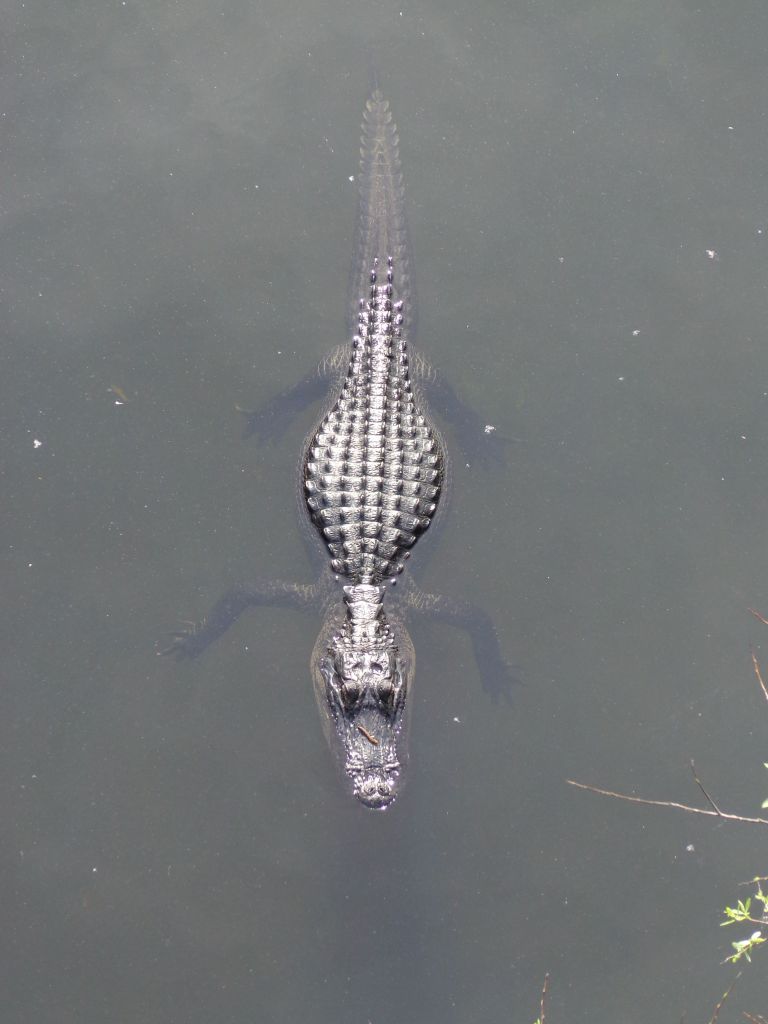
2. When we moved to Florida, many friends were concerned as they had heard stories about alligators in swimming pools, alligators eating little dogs, etc. As we now know, alligators belong to the dinosaur family, have been around for 1.5 million years, and have not changed much over time. And we learned that there is also the American Crocodile living in Florida. Name two differences between the American Alligator and the American Crocodile.
3. Exploring the Florida Keys was one of our early highlights after moving here. Life must have been completely different before the islands were connected, first through Henry Flagler’s railroad and then through the Overseas Highway. As a result of this isolation, an animal subspecies developed that is unique to the Keys. Which animal is it?
4. What well-known and unique body of water is created by the confluence of the Kissimmee River and Lake Okeechobee?
5. We had heard SO MUCH about the Everglades! Early on, we visited Shark Valley and were, honestly, not impressed. It looked like Denmark – lots of yellowish grass plus some birds and, unlike in Denmark, stone-like alligators on the road (that did impress us). But as we then learned, the Everglades are a unique ecosystem! We picked up a book in the Shark Valley gift store that raved about them: “There is no other Everglades in the world. … . They are unique in the simplicity, the diversity, the related harmony of the forms of life they enclose. The miracle of the light pours over the green and brown expanse of saw grass and of water, shining and slow-moving, the grass and water that is the meaning and the central fact of the Everglades of Florida.” Who wrote this book, and what is its title?
Category 2: History
6. Which city in Florida is the oldest European-established settlement in the continental United States?
7. Of course, other people lived in Florida before Europeans came. Name TWO Native American tribes of South Florida, past or present.
8. When was Miami founded, and who founded it?
9. When it comes to walls dividing cities, historic examples come to mind, especially Berlin and the Berlin Wall (of which, by the way, a piece is installed at Miami Dade college). Unbeknownst to many, several places in Miami Dade also erected walls in the 1930s, 40s, and 50s to enforce racial segregation. Name one of these places.
10. At the occasion of Fidel Castro’s death in 2016, an LA times article titled “How Fidel Castro’s revolution remade South Florida” states “His reach stretched across the Florida Straits, from Havana to Miami, and his influence in South Florida may have surpassed even that of Henry Flagler, whose railroad opened up the area to modern civilization. (…) When Castro ascended to the Cuban presidency more than five decades ago, Cubans made up only 2% of Miami-Dade County’s population. As of 2010, the percentage was – how high?
Choice of answers: 20% 35% 50% 65%
Category 3: Culture

11. Back to the Keys – the most famous citizen of Key West is Nobel prize-winning author Ernest Hemingway, who lived there from 1931 to 1961. But there were many other famous people who made Key West their home or stayed and worked there for periods of time, including one US president, a fashion designer, and several authors, poets, and playwrights. Name one of them.
12. One of the things we had a hard time getting used to after moving here was – is – Miami traffic. We came from a small town and were often – literally – scared for our lives. We wondered if people found this normal until we stumbled upon a humorous piece in the Miami Herald, written in the form of a letter from father to daughter (excerpts): “Dear Sophie – so you’re about to start driving! How exciting! I’m going to kill myself. … You may think I’m exaggerating the badness of the drivers down here, Sophie, but that’s because you haven’t been at the wheel of a car on the Palmetto Expressway going 60 miles an hour, travelling forward – which, as you will learn, is considered to be the traditional direction for vehicular traffic on expressways – only to encounter a vehicle … going backward. In your lane. It’s how some Miami drivers handle the baffling problem of what to do when you miss an exit. (…)
Reality-based Florida Driver’s Q&A
Q: How is the turn signal used in Florida?
A: It is used to indicate to other motorists that you do not realize your turn signal is blinking.
Q: Could it also be used to signal your intention to turn or change lanes?
A: Interesting! Nobody has ever tried that.”
Who is the author of this piece, who is also a Miami Herald staff writer?
13. While she never lived in Miami, this Cuban singer had a large fan base in South Florida. During her seven-month battle with brain cancer she let it be known that she wanted a public viewing in Miami after her death. On the day of the funeral, downtown Miami saw a crowd of anywhere between 75,000 to 150,000 people waiting to file past her casket in the Freedom Tower. Today, a mural of the laughing singer adorns the wall of the American Museum of the Cuban diaspora. Who is she?
14. In 2015, the “greatest female architect in the world” died of a heart attack at age 65. She was a resident of Miami and built the “One Thousand Museum” Tower in downtown Miami. According to her obituary, “she leaves behind an impressive body of work that is unmatched to this day. Her architecture speaks volumes about her brilliance, innovation and stands as a testimony to her greatness.” What is her name?
15. In 2017, a movie set in Miami won the Academy Award for best picture. It follows Chiron, a black boy and young man growing up in the tough neighborhood of Liberty City in search of his queer identity. What is the title of the movie?
Category 4: Things that happened since we came
16. By the end of 2013, 19.5 million people lived in Florida, and between 2014 and 2023, that number grew quite a bit! By how many percentage points?
Choice of answers: 6% 12% 16% 22% 26%
17. In retrospect, 2014 and 15 were SANE years. For example, in August of 2014 Florida’s ban on same-sex marriage was ruled unconstitutional. One thing happened that those of us working at Florida International University CONSIDERED crazy at the time, but times have changed. It involved Donald Trump (before he was associated with anything presidential) and an event to be held on FIU grounds. According to a Miami Herald article, “Professors complained for a variety of reasons: They weren’t notified beforehand; some thought this kind of event was inappropriate for an academically serious institution.” I had written a letter to the President of the University objecting the event, and this line from my letter was cited in that Miami Herald article: “female objectification is a dangerous part of American mainstream society”. What was the event?
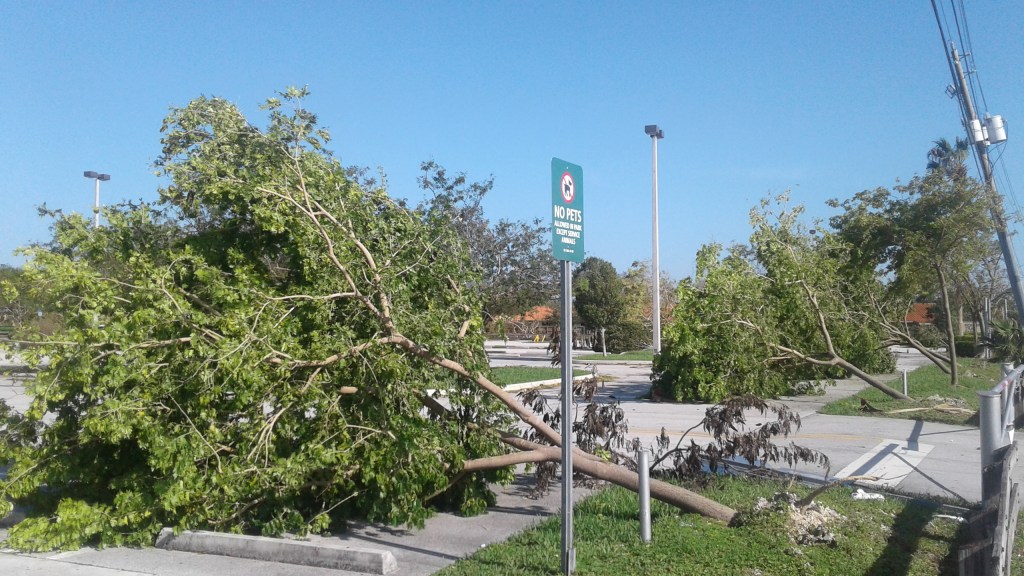
18. In 2017, we experienced our first major hurricane – Irma – and decided to evacuate. This evacuation became kind of an Odyssey, and led us up on Florida’s West Coast, the panhandle, into Alabama. We learned several things, for example that in central and north Florida and Alabama, people love their anti-abortion billboards and radio stations. We also learned something about Florida and time-zones. What did we learn?
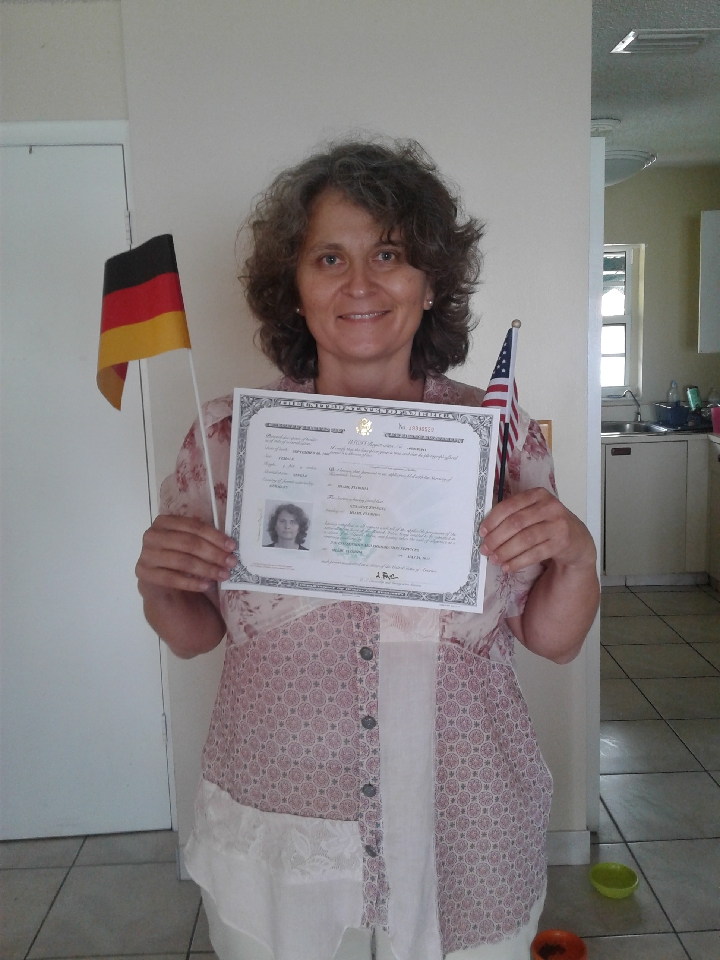
19. In 2018, I became a US citizen. Celeste followed the next year. The ceremony was extremely memorable – being in a room with about 160 people from 30 nationalities and many of their family members. There were tears and hugs and sighs of relief and screams of happiness. In 2018, over 760,000 people were naturalized in the United States. Prior to the ceremony, we all had to pass a naturalization test for which we were given a book with 100 civics questions. For this trivia, I am asking you to answer the only question from that book that had anything to do with women:
What did Susan B. Anthony do?
20. Many traumatic and even deadly things have happened in the 10 years that we have lived here – I will not try to turn them into a fun trivia question. But one memorable death occurred this year, on August 18, 2023, to be exact. A 57-year old female, who had lived for over 50 years in Miami in captivity, died from what was “believed to be a renal condition”. This was particularly unfortunate because the female, sometimes called Toki, was set to be released in March 2024 to her home area, where her 95-year-old mother is believed to still be alive. Who is the female?
Correct Answers:
- Mockingbird, Florida Panther, Zebra Longwing
- Alligators (1.25 million in Florida; broad snouts; dark color; live in freshwater; teeth from lower jaw are not showing) vs. Crocodiles (1000-2000 in Florida; slender snouts; greyish-green color; live in coastal saltwater/ brackish water; teeth from lower jaw are showing)
- Florida Key deer (size of a dog)
- The Everglades
- Marjorie Stoneman Douglas, River of Grass
- St. Augustine, established in 1565
- Past: Tequesta, Calusa; Present: Seminole, Miccosukee
- 1896; founder: Julia Tuttle (at time of incorporation there were 300 people living here)
- Liberty Square Wall (1930s); Coconut Grove Wall, South Miami Wall (1940s-50s, after WWII)
- 34% of Miami Dade County’s population were Cuban in 2010, see https://www.latimes.com/nation/la-na-castro-florida-20161127-story.html
- Harry Trumann, Calvin Klein, Judy Blume, Jimmy Buffett, Truman Capote, Robert Frost, Shel Silverstein, Wallace Stevens, Tennessee Williams
- Dave Barry
- Celia Cruz
- Zaha Hadid
- Moonlight
- In June 2023, 22.6 million people lived in Florida. That is a 16% increase from 2013.
- 2015 Miss Universe Beauty Pageant (run at the time by the Trump organization)
- Florida stretches across two time zones, Eastern and Central
- Fight for women’s rights
- Lolita the orca whale at Miami Seaquarium


Very cool event, enjoyed everyone’s company!
LikeLike
How quickly one forgets! And — I never heard of Zaha Hadid, and would have guessed that the 57-year-old female was a manatee. That latter one didn’t make the international news …
Sounds like you had a great party! Glad you got to like Miami after all.
LikeLike