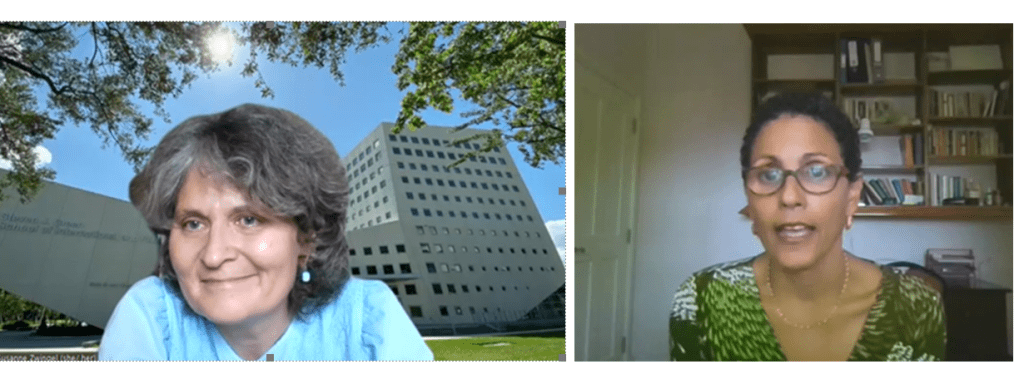
I haven’t written in over two weeks, partly because I was very involved in my research, and because as part of my stay here, I gave several research talks. That was a great way of giving back and getting to know more people. Even if, alas, all of those lectures were on zoom. Boy, am I looking forward to being in a room with people and experience them in their full humanity. Then again, zoom has made it so much easier to join an interesting webinar wherever it may be in the world, without the need of physical presence; I for sure have benefitted from that. Perhaps we should make hybrid presentation forms the new normal for the future?
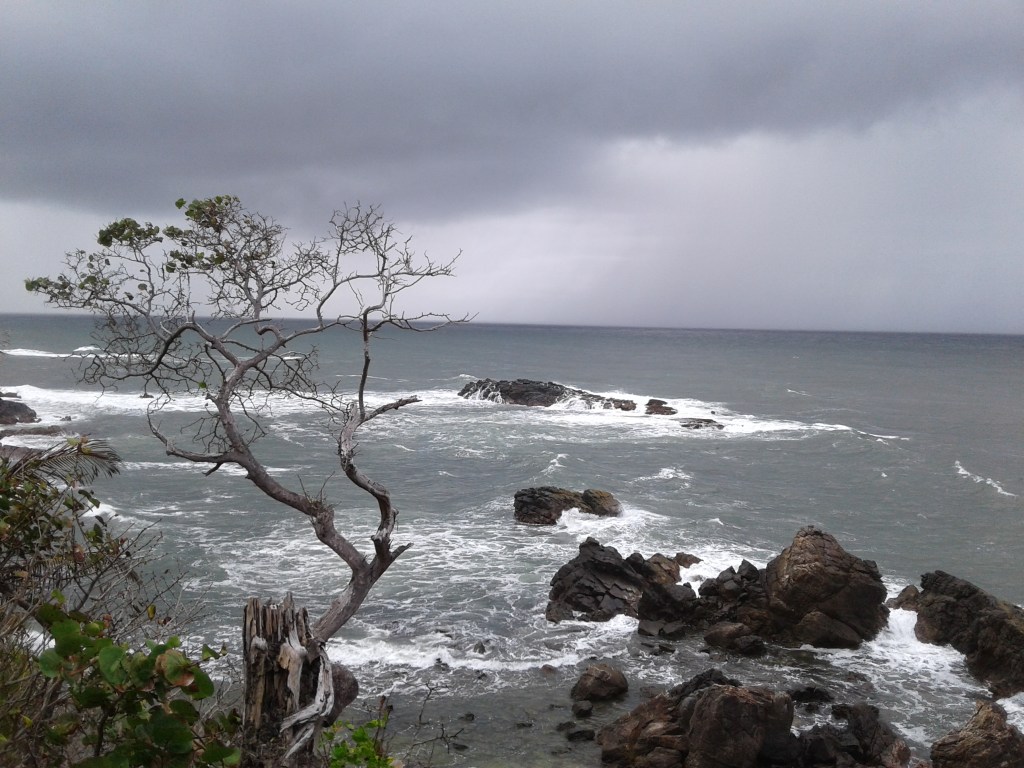
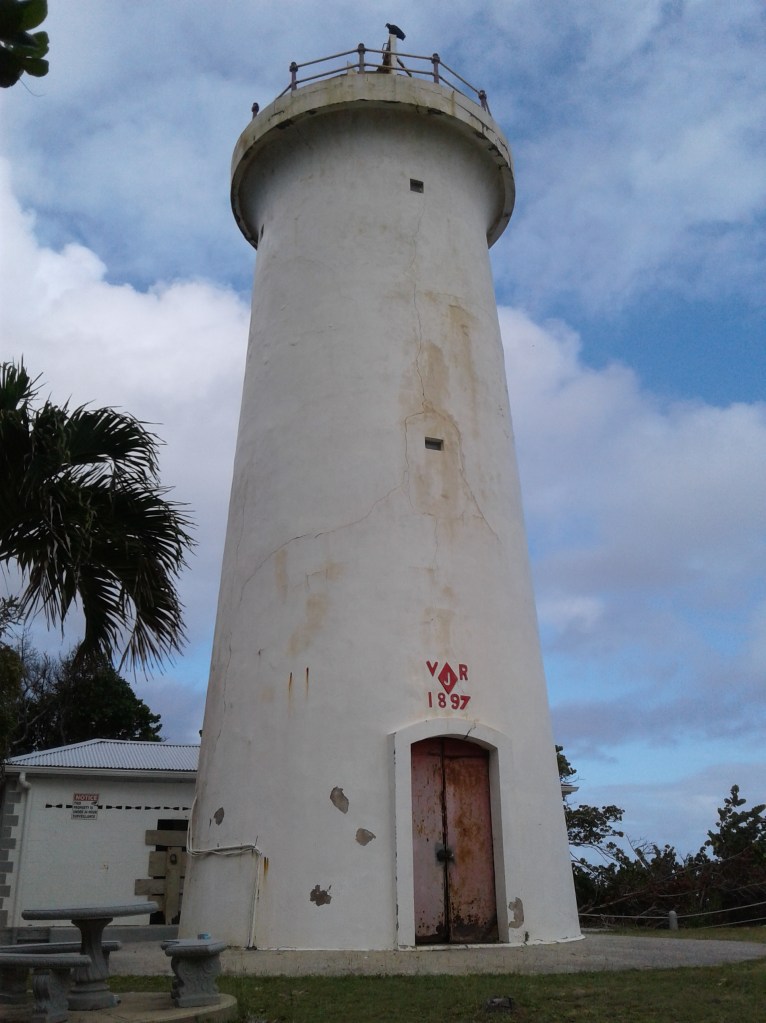
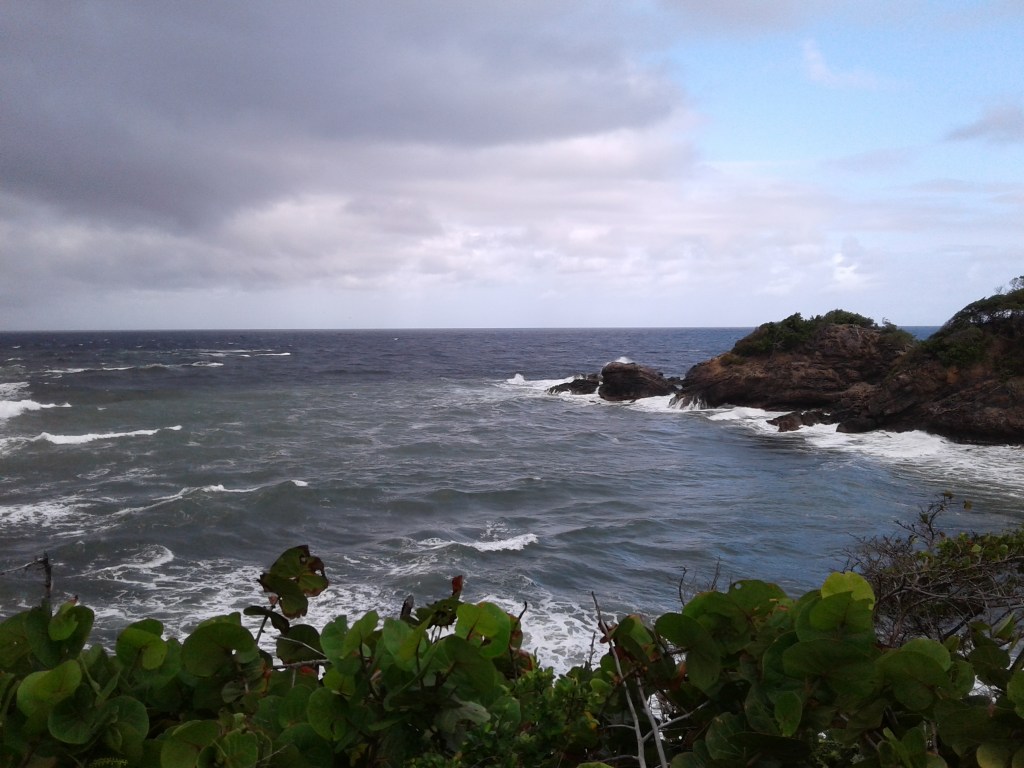
I should also not conceal that I have heavily engaged in tourism. After all, I will soon be gone. And I now think of myself as a scholar tourist. New identity, try it. For instance, I went on a fantastic trip to the north-east of Trinidad, to a village called Grande Riviere. It was wonderful and took quite long because this part of the country, around Toco, where the Atlantic and the Caribbean Sea meet, is rather isolated. The road is narrow and curvy (what else is new). I learned that the first road to Toco was not built until 1930. Before that, Toco had a closer relationship to Tobago, which is 35 kilometers away, than to the rest of the island. The one connection was the so-called round island steamer (running between 1818 and 1928) that surrounded Trinidad once per week and brought in goods. Here you see the view from Galera Point, that is the north-eastern most tip of the island where the British built a light house (in 1897).
My plan is to write two or three more posts before I leave, or in the days shortly thereafter. Today’s post is about some admirable Trinbagonians. There are several, but they are often not very well known outside of the region or the beyond the Caribbean diaspora, so perhaps this is interesting for you.
Let me start with someone I have often mentioned: the first Prime Minister of the country, Eric Williams.
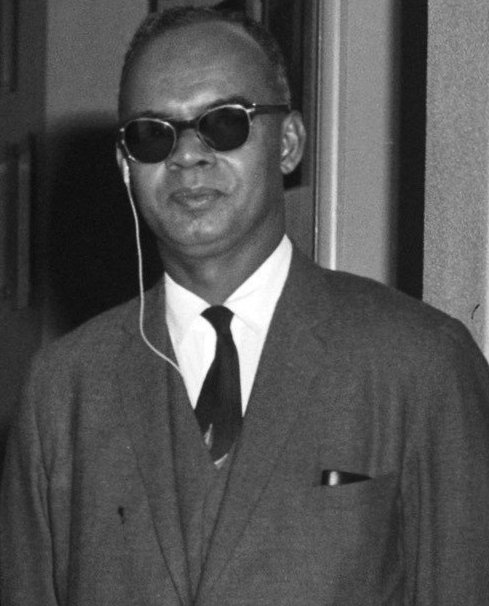
Here is a clip of him speaking at Independence Day 1962 on the meaning of democracy – I find it impressive https://www.youtube.com/watch?v=uPMTtiZEyTs
A bit of contextualization: The political system is British influenced hence the Prime Minister is head of government. There is also a head of state: during colonial times, that was the British monarch, represented by a governor. After independence, T&T retained the Queen as titular head of state, then represented by a Governor General, but in 1976, Trinidad became a Republic and ended that connection. Head of state was henceforth the President. The country has had six, the current one being a woman, Paula-Mae Weekes.
As for Prime Ministers, there have been seven. One of them was also a woman, I mentioned her before, Kamla Persad-Bissessar. However, Eric Williams is a true standout. He led the country from independence in 1962 until his death in 1981. I read a wonderful piece about him written by Patricia Mohammed (titled “A Very Public Private Man: Sketches in a Biography of Eric Eustace Williams”), a fantastic feminist scholar whom I also had the pleasure to interview recently. When Williams died in 1981, people were in shock. It must have been hard to believe that he could be gone, given his long, steady, and responsible service to the country. For a change, the man was not corrupt, and while he was also not without fault, I wish every country, whether newly independent or not, a leader like him. His public persona is towering, and he is often referred to as father of the nation.
In Mohammed’s piece, she looks at him as both a public and a private figure. Eric Williams was born in 1911, the oldest of 12 children into a middle-class family. He was very intelligent, went to study at Queen’s Royal College which was (and still is) the most prestigious high school for boys. For his father, it was very important that he excelled (in a way, to fulfill the dreams that he had had for his own life but was denied access to). Indeed, Williams won THE (one) island scholarship of his year to go to college in the UK. He set on studying history at Oxford University, to the great dismay of his father who wanted him to be a doctor.
In 1938 he completed his dissertation at Oxford. It was later published under the title “Capitalism and Slavery” and was path breaking in the sense that he offered an economic history of capitalism that made slavery its core element. In his view, sugar plantations were at the center of 17th/ 18th century capitalism, and they required slave labor (that is low cost, exploitable labor). Because of this requirement, capitalism created the necessity to see some humans as property, and the corresponding construction of racial inferiority. Hence, racism was, for him, the consequence, not the cause, of slavery. Later, he argued, West Indian sugar plantations fell out of capitalism’s favor. The sugar produced was not anymore profitable on the world market, which is the true reason for the end of slavery, not abolitionism. The British did not like this argument – on the one hand, because they did not look as humanistic as they would have liked, on the other, because Williams was among the first thinkers to write with Caribbean, not European experiences at the center of his attention. Accordingly, when he first wanted to publish this work, nobody saw it as a “general” book about capitalism, but rather one about the Caribbean – in other words, a less relevant, peripheral account.
He moved to the United States and taught at Howard University for several years before he went back to Trinidad, where he quickly made a name of himself. His experiences in Britain (in short: of racism) certainly were fuel for his scholarship, but even more so, for his political career which was so deeply infused by his broad historical knowledge. His life goal: to work for the self-determination of Caribbean people.
According to Mohammed, he was a brilliant academic who built leadership for his country through intellectual analysis. He was a good public speaker and regularly toured the country to give lectures that were attended by many people. When he started to build a political movement in the 1950s, he benefitted from labor organizers before him who had created political consciousness starting in the 1930s. Williams was not a working-class guy, and while he bent over backwards to get in touch with ordinary people, his radicalness was not about being associated with the fights of unions, but rather to bring together all the interests that needed to be addressed in order to lead the country to independence.
Hence, the movement/ party he built – the People’s National Movement, to this day one of the dominant political parties – was supposed to represent the entire nation. This did not fully work out, as many Indo-Trinidadians did not feel represented by the PNM and built their own party. But it is still stunning, for me at least, how this intellectual guy could lead a population that only started to get politically sensitized into independence.
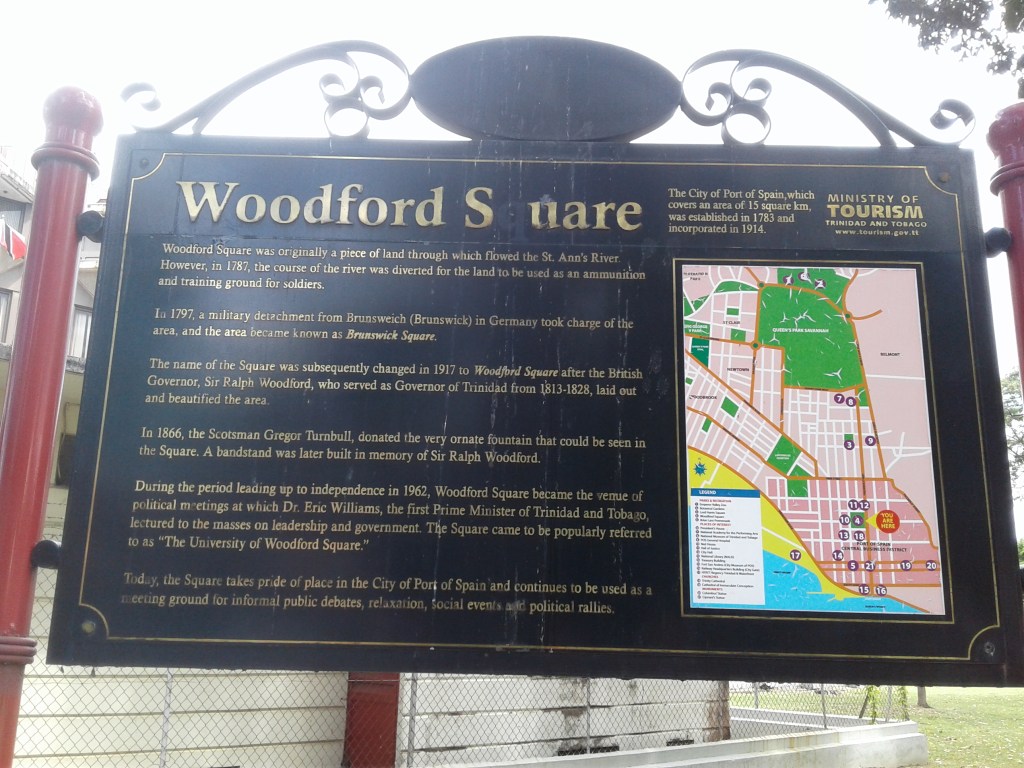
He used one central square in Port of Spain, Woodford Square, for regular educational public lectures – it was then re-named “Woodford University”. One of his most famous speeches was named Massa Day Done – in short, the days of the reckless, self-centered plantation owner is over and we, the people of Trinidad and Tobago, take our fate in our own hands. Worth reading!
He did a lot of good during his time as Prime Minister, starting from offering accessible higher education and creating a robust health care system. But his star lost some luster in the 1970s, partly due to the protests of the Black Power movement which demanded more change and better living conditions for all. Williams felt misjudged and wanted to leave public office during the 70s, but somehow there was nobody apt to replace him. He became more withdrawn and died alone at home in 1981.
As for his private life, he was married twice, but was not very much in touch with his first family which remained in the United States. With his second wife, he had one daughter. Because his wife died early, he raised his daughter as a single father, while being Prime minister. We all know that most of the raising was done by other people, but it is still a remarkable constellation. His daughter Erika has worked diligently to keep alive her father’s legacy. The Alma Jordan Library at the UWI has a small museum about him, put together with her help, that I had the honor to visit. Part of it is his desk and study recreated. To George: it reminded me A LOT of your study. No further comment.

The other two personalities will have to do with a shorter introduction: Here is Carlisle Chang (1921-2001), an important Trini artist in different mediums, including murals, paintings, ceramics, and Carnival costumes and scenes. On a visit to the national museum, my eye caught a photo of a mural of his called “The inherent nobility of man”. You can see it here.
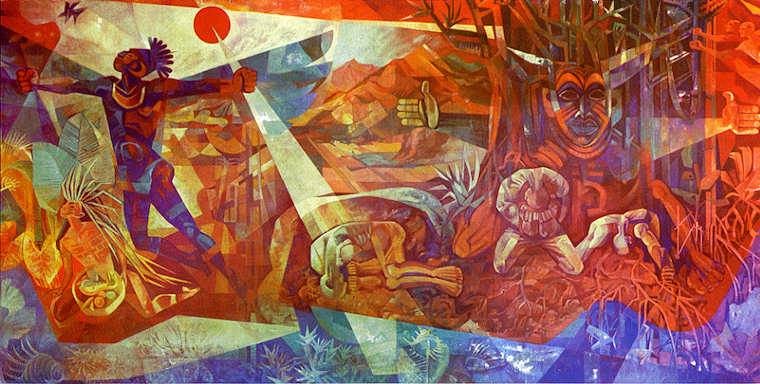
I love its colors, energy and symbolism and wanted to find out more about it. He did it in 1962 in the international airport. I think it is quite a statement for a young, independent nation, and of course, everybody who comes to visit sees it right away. Chang was generally important as an artist who contributed much to the creation of a Trinidadian culture that is proud of its many influences. Himself of Chinese descent, he says in one interview I watched that he always thought of him as Trinidadian and nothing else. Somewhat mysteriously and sadly, the mural at the airport was demolished in 1979 when the airport was expanded. It remains unclear why that was done, but Chang was certainly not consulted. From my point of view, this is an irreparable loss.
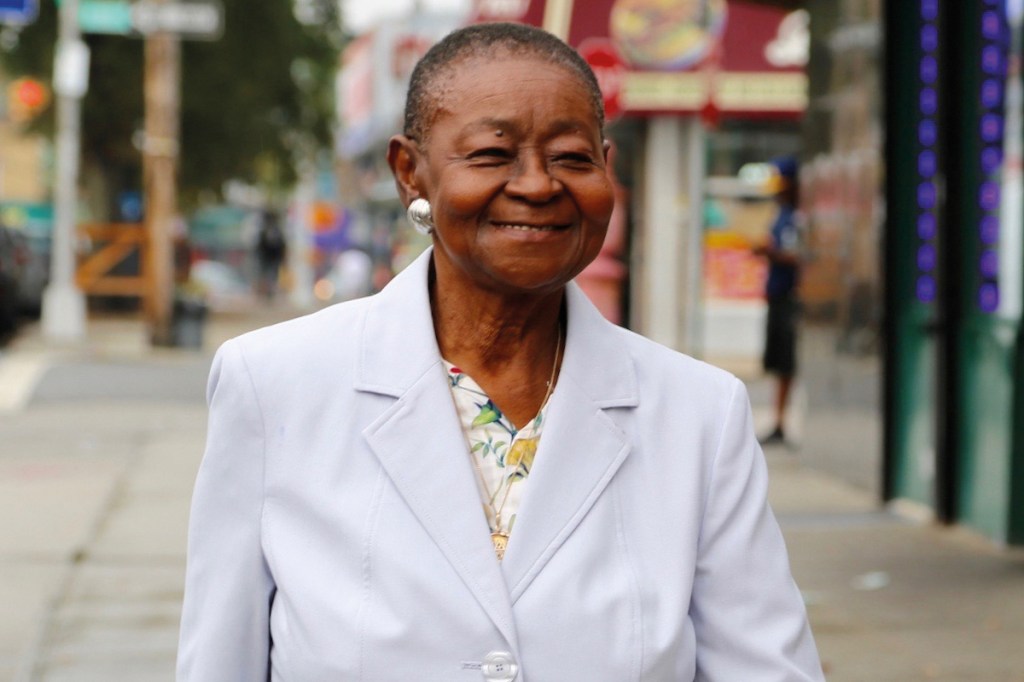
And finally, my third person for you: Calypso Rose!
I have not written about Calypso, mostly because I don’t know very much about it, but it seems fair to say that it is a musical and lyrical tradition in Trinidad and Tobago that is the backbone of society. It originated in the 19th century, and apart from the rhythmic music itself, the point is to get a message out. In colonial times, it was one tool to criticize politics (and was censured for that), and to this day, famous calypsonians address important current issues and reach a wide audience with their messages. Most calypsonians were/ are men. The most iconic one is called Mighty Sparrow – he even has a statue in Port of Spain. The genre was also carried around the world – I knew it as a child (without knowing its name, I should say) performed by Harry Belafonte.
Into this male-dominated space enters Calypso Rose, born in 1940 as Rose McCartha Linda Sandy Lewis in a small village in Tobago. She starts composing and singing very young – according to her website, she has a song as early as 1955 which is the first calypso song to denounce inequality between the sexes. (Check out the website, it is very informative! http://www.calypso-rose.com/) In the 1970s, she becomes Calypso queen – a big title! And eventually, because of her fame and popularity, the title of “Calypso King” is changed into the “Calypso Monarch”. Before her, it was apparently not conceivable that a woman could win it, but these times were over by 1978. You will not be surprised to hear that I love this woman!
I leave you with two clips: Check her out her iconic song “Calypso queen” https://www.youtube.com/watch?v=l-j-tPbOfYQ
And here, in her “Leave meh alone” you also get some impressions of what Trini Carnival looks like https://www.youtube.com/watch?v=KQ0otZhMXTk
 The common sense feminist
Nice blog post!
I looked up Toco on Google maps. Wow that peninsula really sticks out there. Kinda scary. Are you anywhere near the Bermuda Triangle?
Thank you for the clip from Eric Williams. I’d certainly never seen him speak, or on film at all. He was great. Why is the straightforward truth so much more difficult today?
Thanks also for the succinct bio. I’m touched by your visit to the library set up by his daughter. By the by, the meaning of your remark on how Williams’ office looked is not very much disguised! (Speaking of which… Do you have my copy of Capitalism and Slavery? I can’t find it right now.)
I’m happy for your travels as a scholar-tourist. I can see that starting a big movement in academia.
Calypso Rose is totally fab, and sharply political!
LikeLike
Glad you enjoyed it! I think you and Williams could have had great, long conversations (in either of your studies).
And you got me an idea with making the scholar tourist into an academic movement 🙂
LikeLike
wonderful that you have fallen in love with TT, including the amazing history. Thanks for reminding me of many of the amazing aspects of TT that stil linger in my mind and influence my approach to life. So glad that you have come to know my amazing friend and colleague, Pat Mohammed and her talented husband Rex Dixon. Tim and I hope to get there once the covid issue subsides or at least is under control.
Look forward to getting you into the book that Marianne Marchand and I are putting together on the silence, voice and the in-between in the Americas. Let me know when you are back in Florida.
Warmly,
Jane Parpart
LikeLike
Happy you enjoy my reflections, Jane! Indeed, it is a country to fall in love with. Looking forward to talking more.
LikeLike
Hello from Suriname! Wonderful to read this blog and thank you for introducing me to Carlisle Chang’s art! Random side note: my mum works in the public library in Oxford and she found the first edition of William’s Capitalism and Slavery in circulation. I also read in a book by Saladin Ambar that he helped to host Malcolm X visit to Oxford and was part of South African solidarity protests (for which he was punished by the University). Best wishes for your final days!
LikeLike
Wow, what a cool connection to Williams’ early years! I am so excited that you are writing from SURINAME – that is awesome! Please keep me/ us posted on what you experience there, enjoy your time and be safe.
LikeLike
I’m so embarrassed: I confused Eric WIlliams (Trinidad) and Eric Abrahams (Jamaica), who hosted Malcolm X, countries and generations apart. Apologies.
LikeLike
Thanks for clarifying that, Jonneke. I had not paid attention to the time frame either. Looking forward to any news from Suriname!
LikeLike