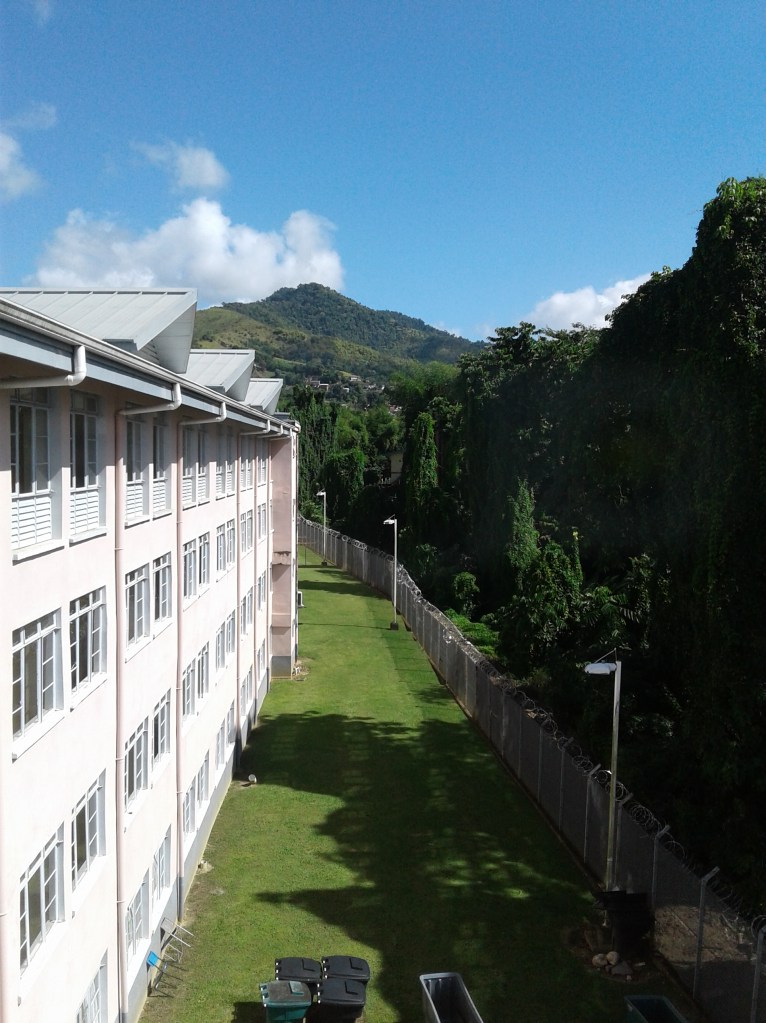
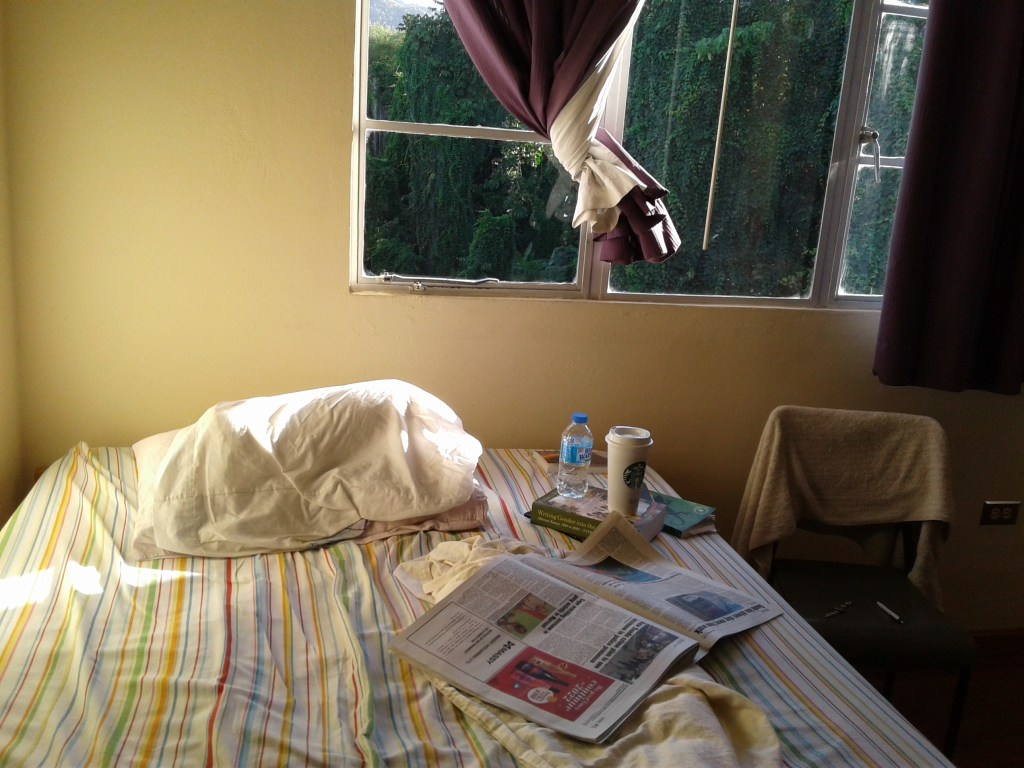
l live in a student residence hall pertaining to the University of the West Indies. It is the most recently built and most comfortable residence hall here. One of my Fulbright friends told me she was, during a pre-covid stay here, housed in another hall that is on-campus, and there were serious issues, including NO air conditioning which was particularly bad in the shared kitchen areas because they were heating up when everybody was cooking. Now, OUR residence hall has air conditioning in all rooms, plus fans. I am not one to cool down my room tremendously (having grown up in Germany when air conditioning was practically non-existent), but it is really nice to have that option. Of course, you can get used to tropical heat – we got a taste of that when there was an island-wide power outage several weeks ago. It came as a complete surprise, started at 1 pm and took 12 hours. That evening, the entire island was dark. For us and for a period that short, this was not terrible. We turned off our devices, gathered and had a really nice evening sharing a meal and conversations. Also, we opened the windows and were lucky to get some breeze.
The choice of cooling down was not available for people BEFORE air conditioning was invented, obviously. I once read a book written in the 1930s about possibilities of reinforcing settlements of WHITE people in the tropics (A. Grenfell Price, 1939: White Settlers in the Tropics). The focus of the book: given that white people have not done too well in terms of living permanently in the tropics – especially not when they had to do physical labor, but also because of disease and the mental strains of tropical life – what are conducive conditions for such permanent settlement? In the author’s view and at that time, this would have been a desirable development; not only because the white race needed space (Hitler was not the only one with this goal in mind), but also because if the number of white people in a given space was too small, it was feared they would be absorbed into the non-white population, which of course represented a terrible deterioration of humanity. This fear also explains the obsessive line-drawing of white elite minorities in many Caribbean islands, Trinidad included, between them and everybody else. ONE of the measures talked about in the book that would allow white people to settle in tropical climates was the advent of air conditioning. The author cites a Norwegian diplomat discussing this idea. It must have sounded rather futuristic at the time, but I can attest that the growth of Miami starting in the 1950s has had a lot to do with air conditioning. Downside: everybody is inside their cooled little space; people go out less, and talk less to each other; and yes, there is an environmental problem. A big one.
For two months, I have lived in a residence hall that is not bad, but not terribly luxurious either. Apart from that power outage, which affected everybody, we have had water and internet outages. My shower water is not getting hot at all. It is not the end of the world, but at my age I do value some comfort.
Therefore, I decided to check into the most expensive hotel on the island for just one night. The Hyatt. I had heard good things. It is at the waterfront and has a pool. Believe it or not, I yearn to swim! You would think on an island, people swim all the time, but the beaches are far and between, and I have swum only once in the ocean thus far. And once under a waterfall. As in many countries in the world, public pools do not exist. In addition to the seduction of the pool, I had also heard of a good sushi restaurant in the hotel and a nice boardwalk. So why not join the 1% for a while?
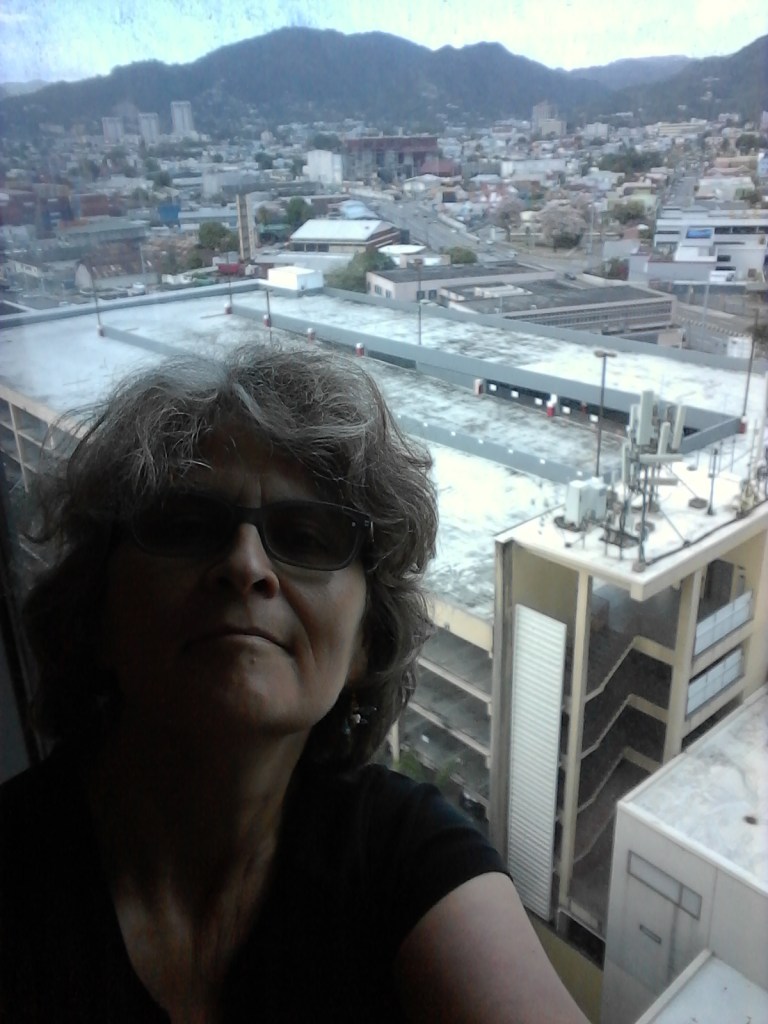
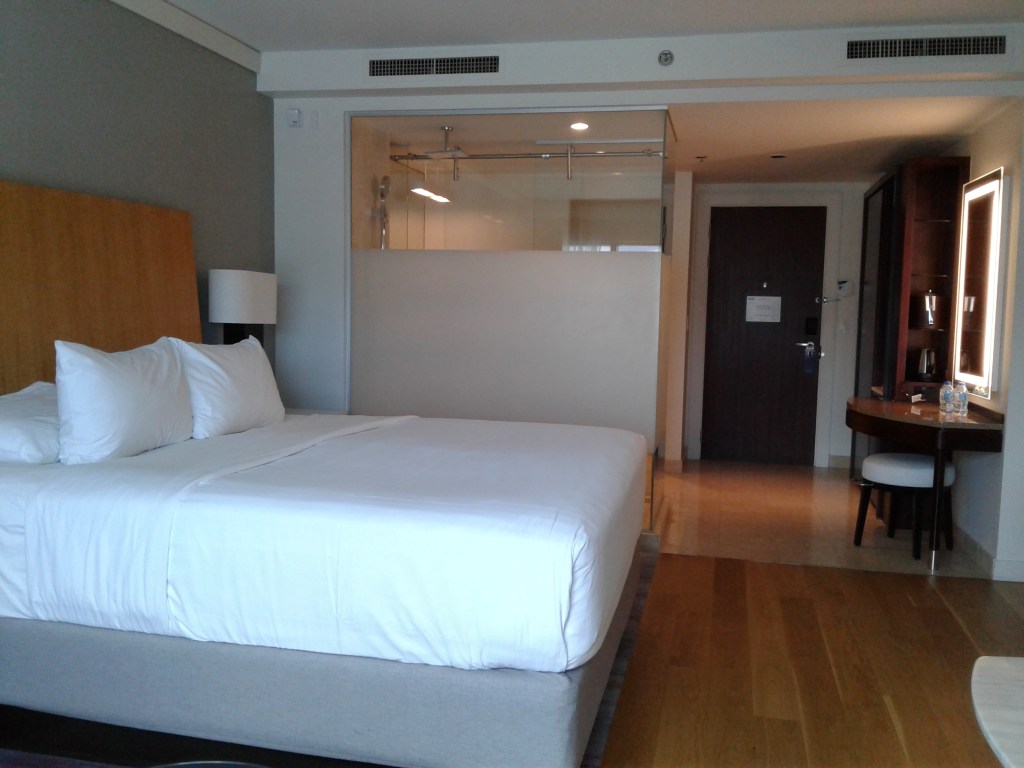
How was this experience? Loved it. Of course, you could say this is plain decadence, even if that is a very relative thing to say. The rooms in this hotel are nice, bright and clean, but not different from any medium to upper-level hotel chain in the US or Europe. Also, I took two, long HOT showers and relished them.
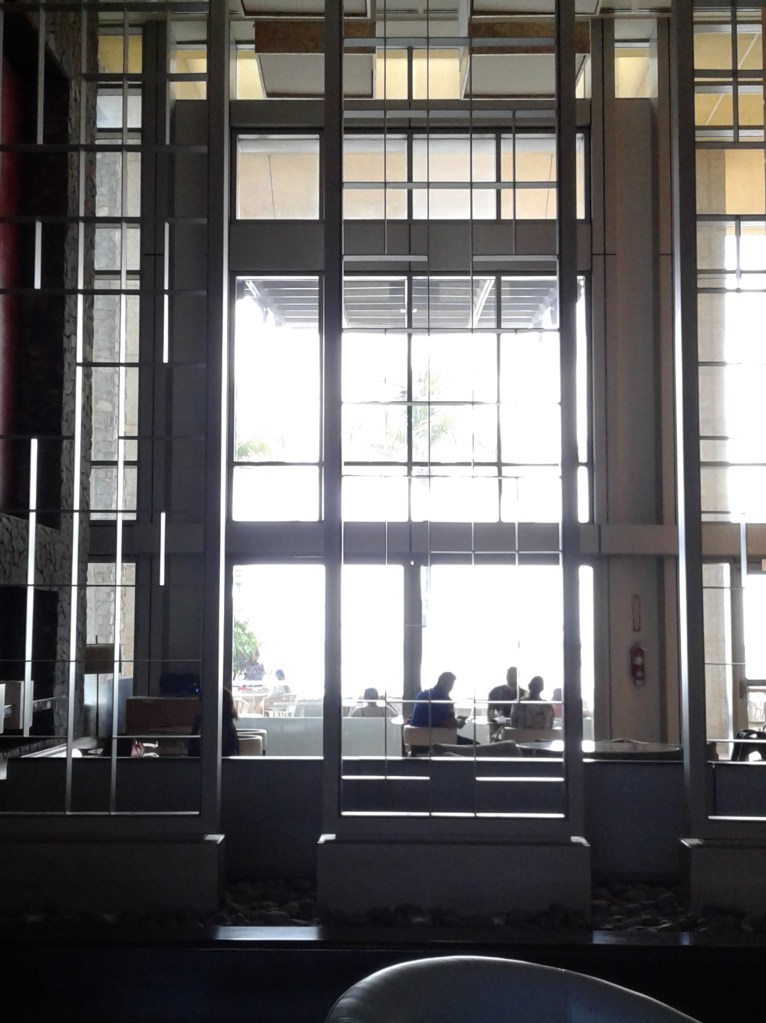
I first walked around on the many levels of the hotel, its restaurants, and the outdoor spaces. Everything in great shape, the place is about creating comfort and luxury for its guests to enjoy. Friendly and professional personnel. And the guests? As you could expect: the Trinbagonians here all very elegantly dressed. And you cannot help but notice: the place where I have seen the most white people during my stay on this island thus far. They were more casually dressed than the locals. There were some white couples; if individuals, these were all male and a bit older (I assume business travelers of some kind); I saw no other single white woman – and also no other women, now that I think of it, by themselves.
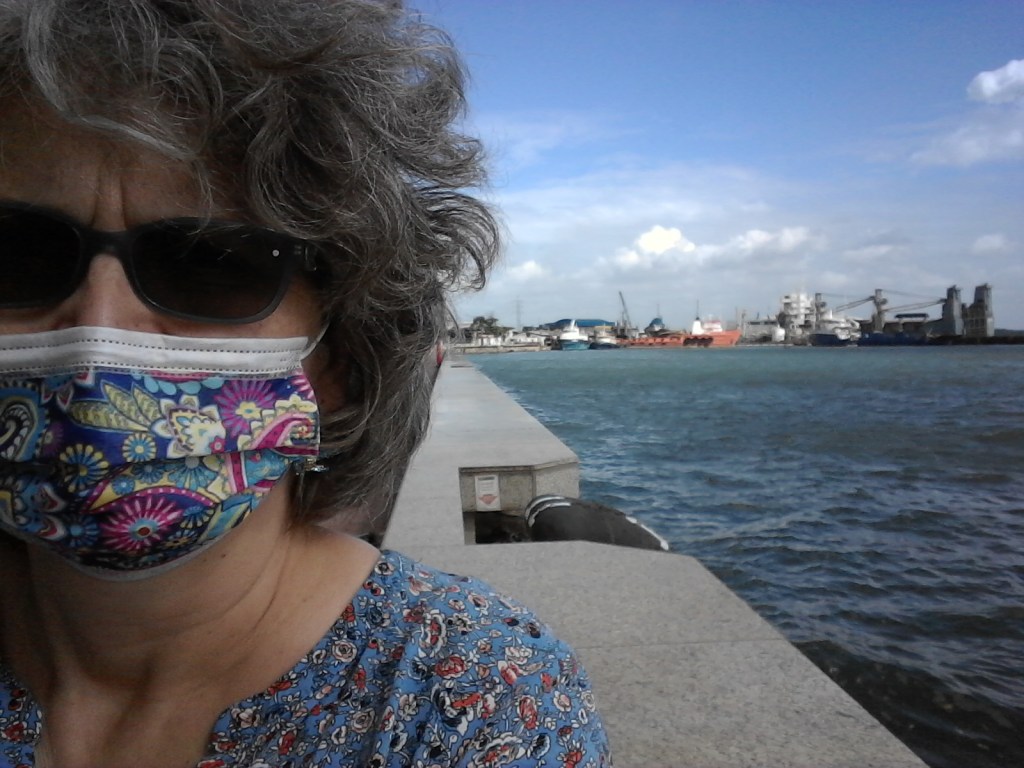
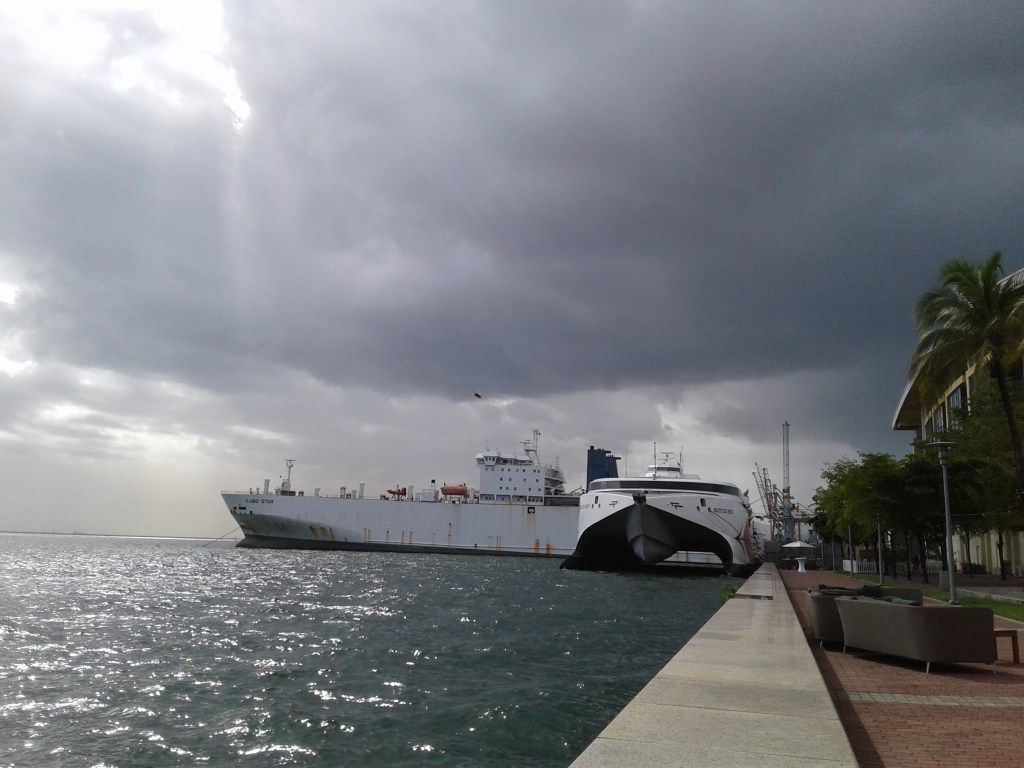
The pool is really nicely placed, so that when you are in it, you feel as if you were swimming in the ocean. However, it is also small and less for swimming and more for floating. I first went in the afternoon, there was music, people were hanging out and drinking cocktails. There were some families – always nice to get the kids in the pool; people taking sun baths; also, one couple that gave me a bit of a drug-lord-plus-arm-candy vibe. But that might be my prejudices. Let’s just say they wanted to be seen.
When this thought crossed my mind, I was reminded of the many potential stories that might be behind the wealth necessary to be a guest here. Many of them are “innocent”, but still part of a geopolitical landscape. Myself – I can be here without being anything special in my home country, but the economic superiority of that country makes the pleasures here easily affordable (at least for one night). Also, when I observed a white middle-aged couple this morning at the pool, I thought that they looked like a very ordinary German/ Dutch/ British … you name it, couple, but here, they represent, to use that phrase from an earlier blog post, a “wealthier exterior”.
People “like us”, we have the option to come here and have fun. Perhaps you remember that in my first post, I talked about how middle aged, white, women are stereotyped as sex tourists in some places in the Caribbean. This got me interested and I read up a bit on sex work/ sex tourism. The eminent authority on sex work in the Caribbean is Kamala Kempadoo. Check her out, she does fantastic work. I specifically looked at an old article of hers (2001) which summarizes the findings of the first multi-country study on sex work in the region: “Freelancers, temporary wives and beach-boys: Researching sex work in the Caribbean” in Feminist Review.
Here, I just want to share a couple of her findings. First, sex work is a phenomenon with blurry lines (for those who think mainly “sex trafficking” and draw a line of moral evil around it – this article provides a completely different perspective with a focus on work and economic dependence). Importantly, clients and workers describe it differently. Female clients, for example, often talk about “romance tourism” when describing their encounters – perhaps because this sounds less predatory and more mutual (aren’t two involved in a romance?). The clients, male and female, always state that economic support is a relevant part of what is going on, yet their main interest is entertainment. The sex workers talk more about the economic dimension, but they also point out that for them, economic safety is part of ANY partner/sexual relationship.
Secondly, we know that gender hierarchies play a role in sex work, but next to that, there is the geopolitical hierarchy between wealthy and poor countries. The sex tourists (and all tourists) come with money and accordingly, their view defines the situation. They want to have fun and don’t think what is going on is “sex tourism”, but rather something more voluntary and based on mutual benefit. They come for leisure and see the Caribbean as their exotic playground. The exotic part fosters certain sexual phantasies and assumptions about more uninhibited sexual practices “on the island” than at home. The workers, on the other hand, do get something out of the work – a living, and sometimes a better one than they could otherwise make. But the point is that in the encounter of Caribbean sex workers and wealthy global Northerners – the pleasures of the latter reign. And since the entire Caribbean economically depends on tourism, they have pushed a kind of development that, just as during colonial times, satisfies external demands. Cruise ship tourism is another example. Not much wealth stays in the region, but massive ecological damage does. But: the clients are happy.
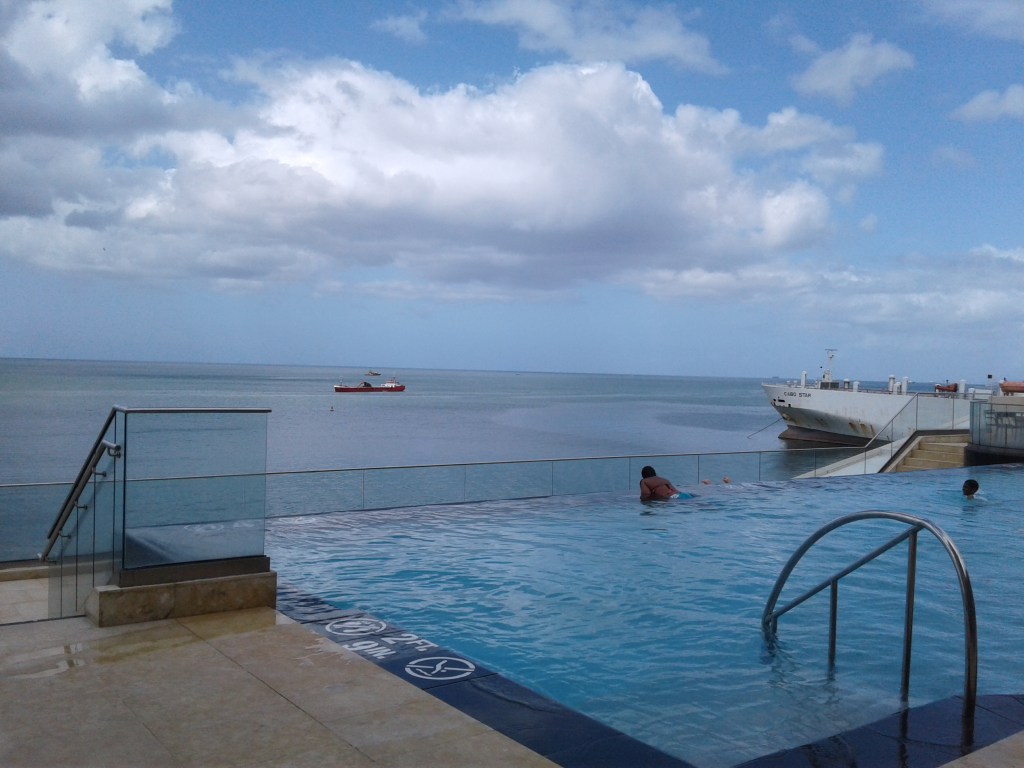
That was a heavy load. All of this is true, but I fear some of you might think I am making it hard for myself (and y’all) to simply enjoy a vacation. I hear you. This morning when I went to the pool, I did some back strokes while enjoying the blue sky dotted with white clouds. I really felt happy and relaxed and was reminded of my mother, who regularly indulged herself with a good vacation. In her daily life, she was hard-working, consistently providing for her family while also earning money. She was also very frugal. But when she went on a vacation, she wanted a nice hotel, good service, good food, just an all-around care-free experience. And for that, she paid. In a context where all of those who WORK to create such an experience are paid fairly and treated with respect, I think that is a worthwhile endeavor.
 The common sense feminist
thank you for articulating and explaining these dynamics so carefully! I will be in a similar social position as you soon and this helps me tremendously to prepare and think through complexity… I can really relate to your one night at the Hyatt as well and I am glad you took two long hot showers.
LikeLiked by 1 person
Hi Susanne, I loved your thoughtful nuanced and complexly textured post. I especially appreciated your reference to the work of Kamala Kempadoo who is a scholar worth reading.
Some parts of your work reminded me of a ‘reality’ show 90-day Fiance which features many interracial couples that, in some ways support the conventional wisdom around race, class and gender dynamics of the North-South binary but also challenge them sometimes.
LikeLike
Thank you so much for your comment! I would love to see what your collective is up to (I checked out your website).
LikeLike