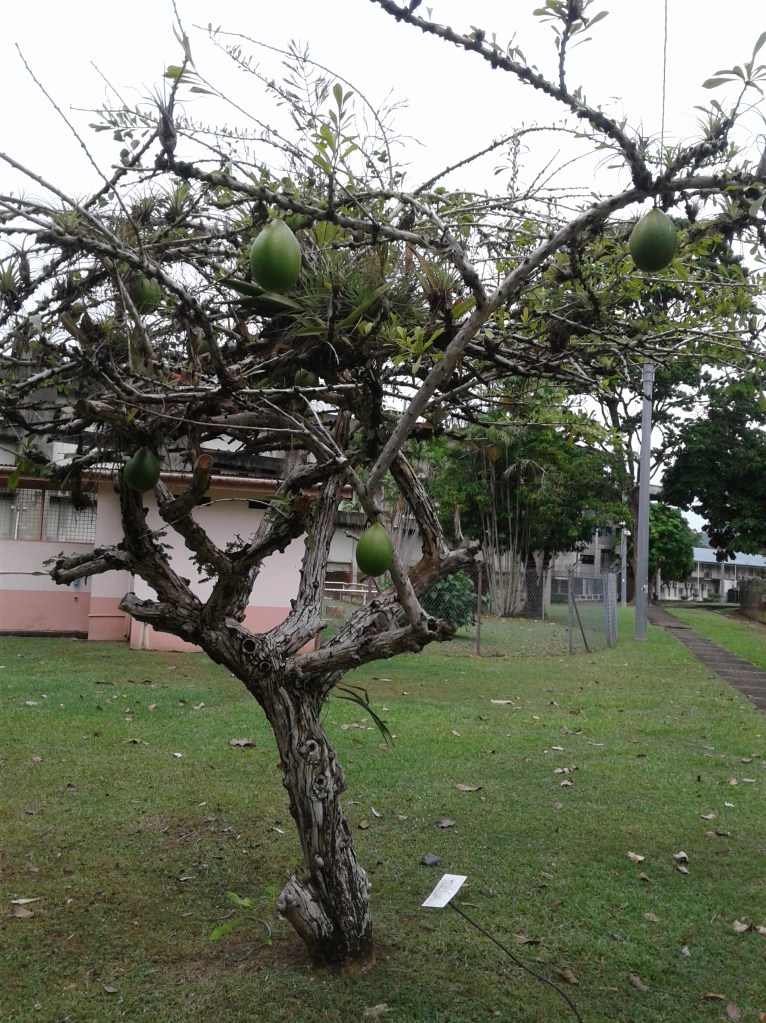
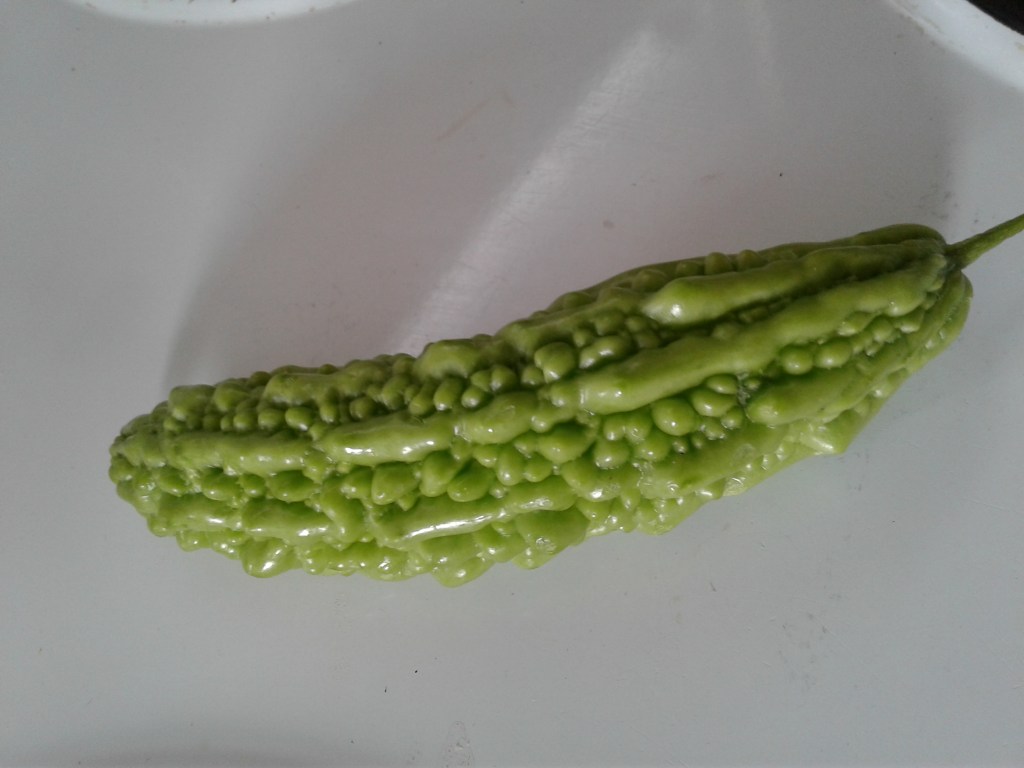
I continue to see a lot of things here that I haven’t seen before. Here are two: can you help me with these green balloon tree fruits? And what is this bubbly-looking cucumber – actually, I was told the name, because a woman at the market explained to me what it was, that it has a bitter “acquired” taste (nothing like a cucumber) and gave me one so that I could try it out.
This is my second post since the war of Russia against Ukraine started. I know that some of you in Germany in particular are directly helping refugees, by hosting them, working with them, and supporting them in a variety of ways. I applaud you! And want to share a great initiative that Rita pointed out to me: https://blue-and-yellow.de/galerie-gallery.html – it helps through photo art and you can contribute with photos or donations.
In the meantime, I have seen new parts of the island of Trinidad (not yet Tobago, but I hope this will be happening in the future). I took a tour along the North Coast Road – that was wonderful. I am probably repeating myself, but the landscape is breathtaking. Very mountainous, with steep inclines and lush vegetation. There is ONE road along the north coast, and it feels like a tiny road, because it is very narrow, with a lot of extreme curves; when another car approaches, it feels like there is not enough space (of course only to me, because I am used to other street sizes). This road, my guide told me, was actually expanded and modernized by the United States during the time they had a base here – to “give back”, so to say, for the right to be there. They set up camp during WWII to help Britain against the German submarines in the Caribbean. One never ceases to learn about how things hang together. Of course, they did not leave when the war was over – that took a bit more public “nudging” as you can read in more detail here, if you like: http://www.triniview.com/Carenage-Chaguaramas/Chaguaramas2.html
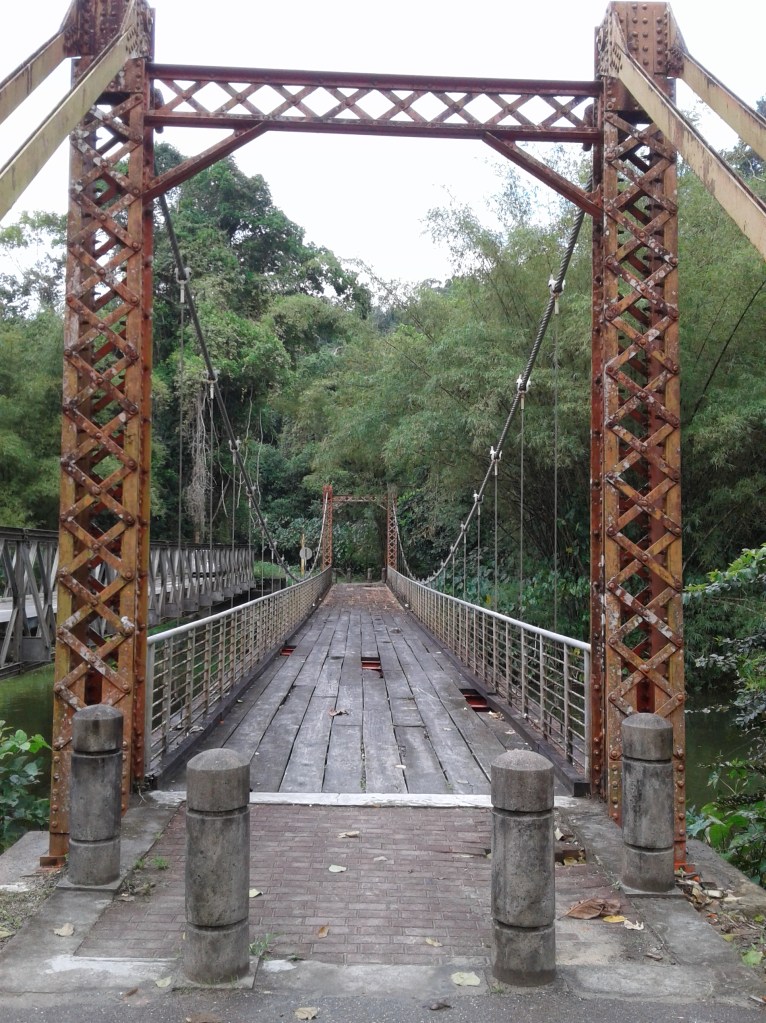
This is the end of the paved North Coast Road. Beyond this bridge – the Blanchisseuse Spring Bridge – it gets rough. But also, great hiking trails!
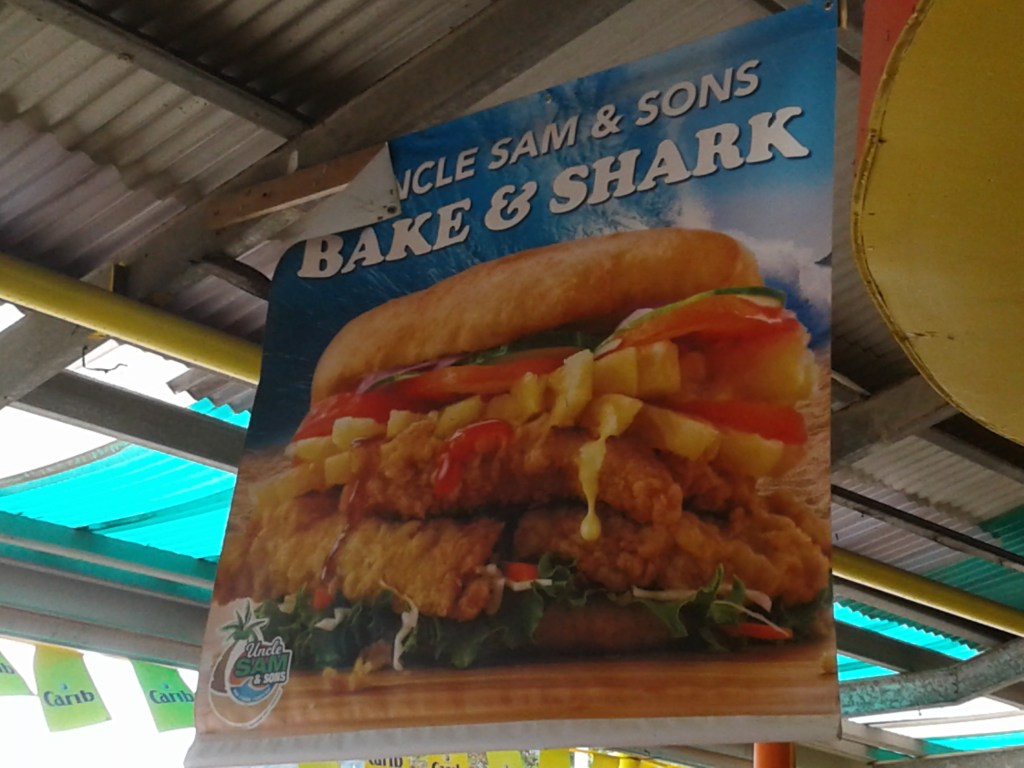
Along the North Coast, there are several great beaches. The most popular, also because closest to Port of Spain, is Maracas – that is where you can eat the famous bake and shark (a delicious sandwich with – fried SHARK!).
Even this beach is a relatively small and undeveloped beach. Tourism is not a big part of the Trini economy (except in Tobago), also because the ocean is rough and has sometimes dangerous undercurrents. Maracas is mostly frequented by locals, and can get really crowded on the weekends.
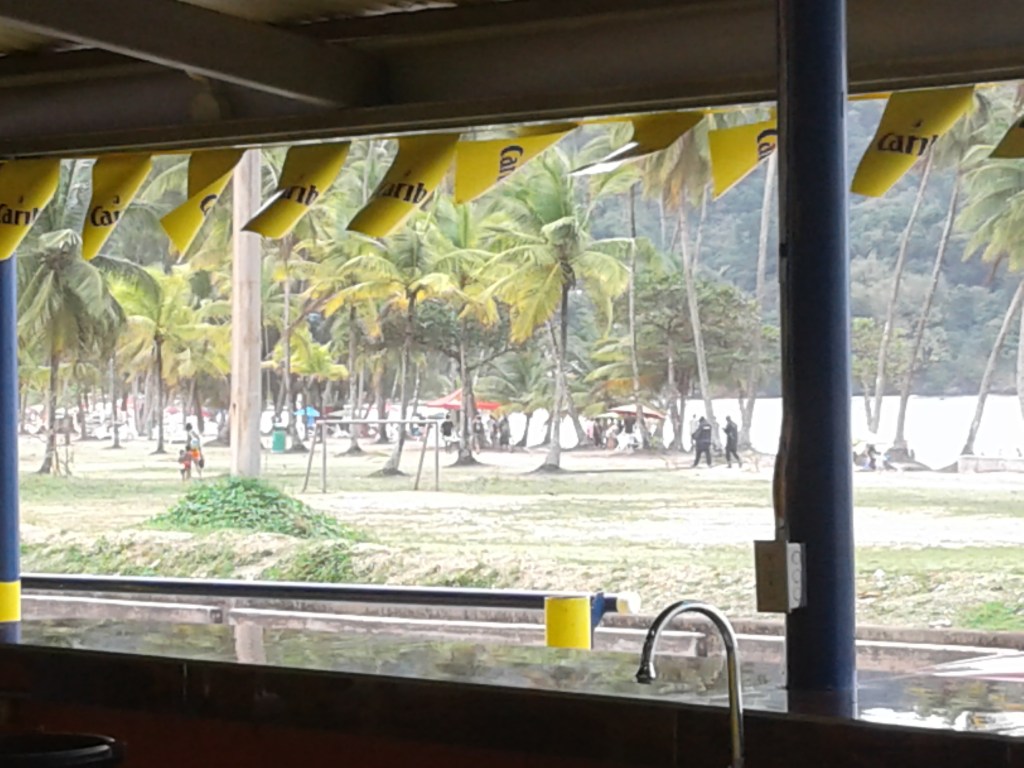
In general, its natural beauty is preserved, and that is even more true for the beaches a little further down the North Coast Road such as Las Cuevas and Yarra Beach.
Las Cuevas beach
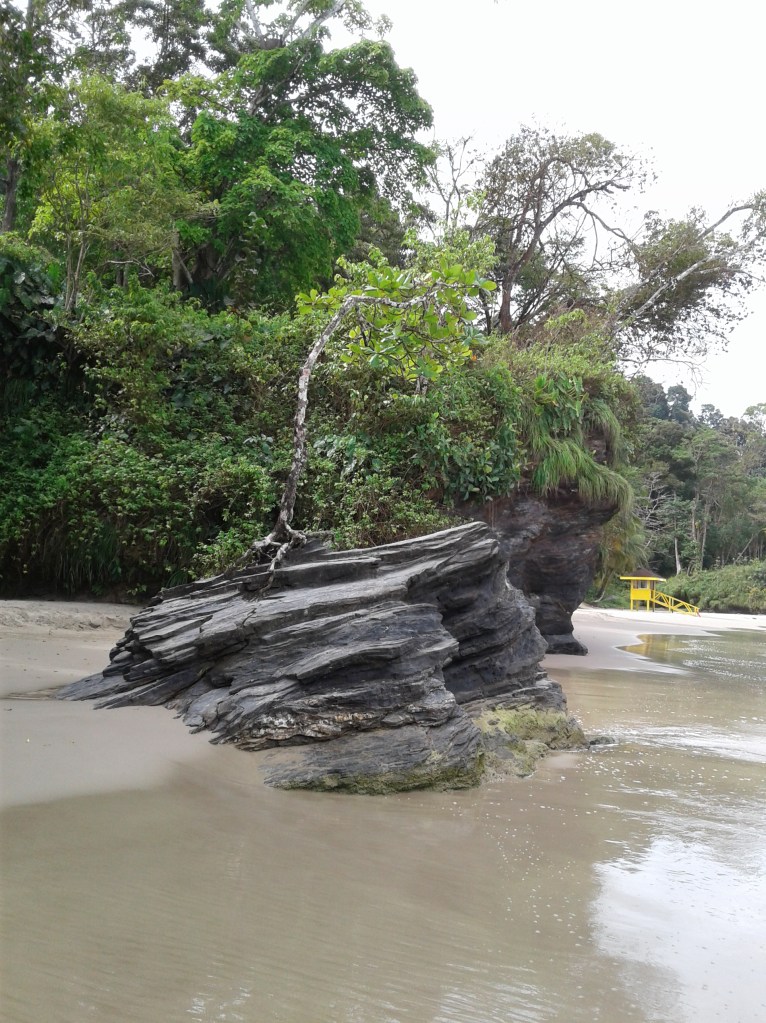
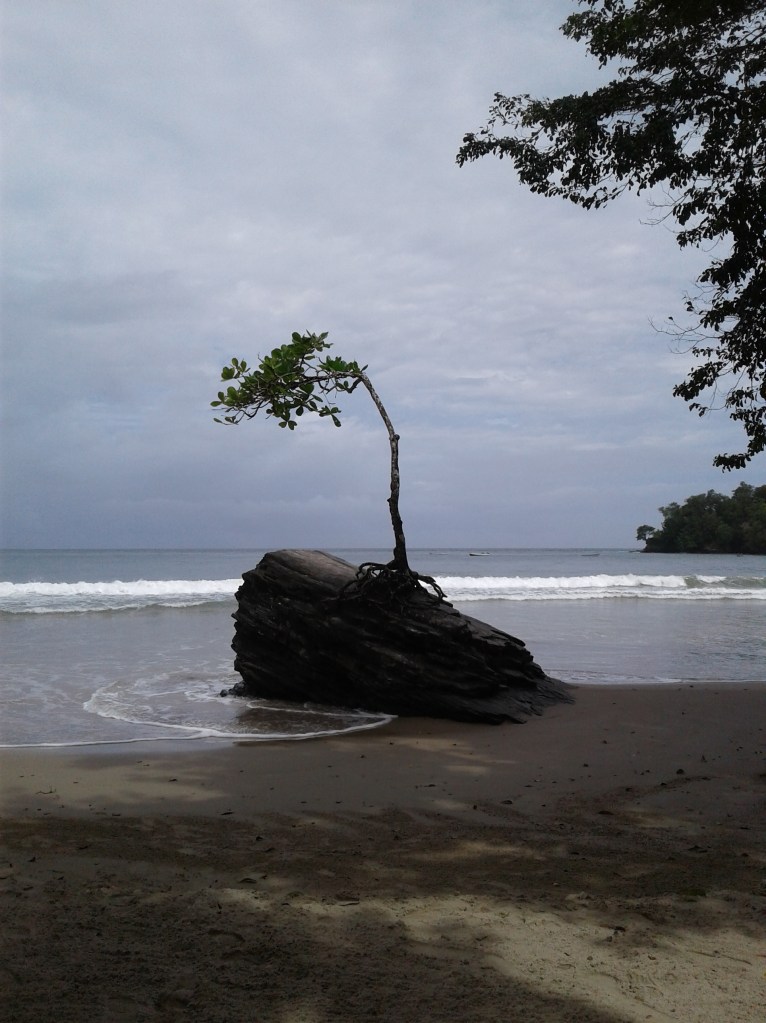
Yarra beach and river Yarra
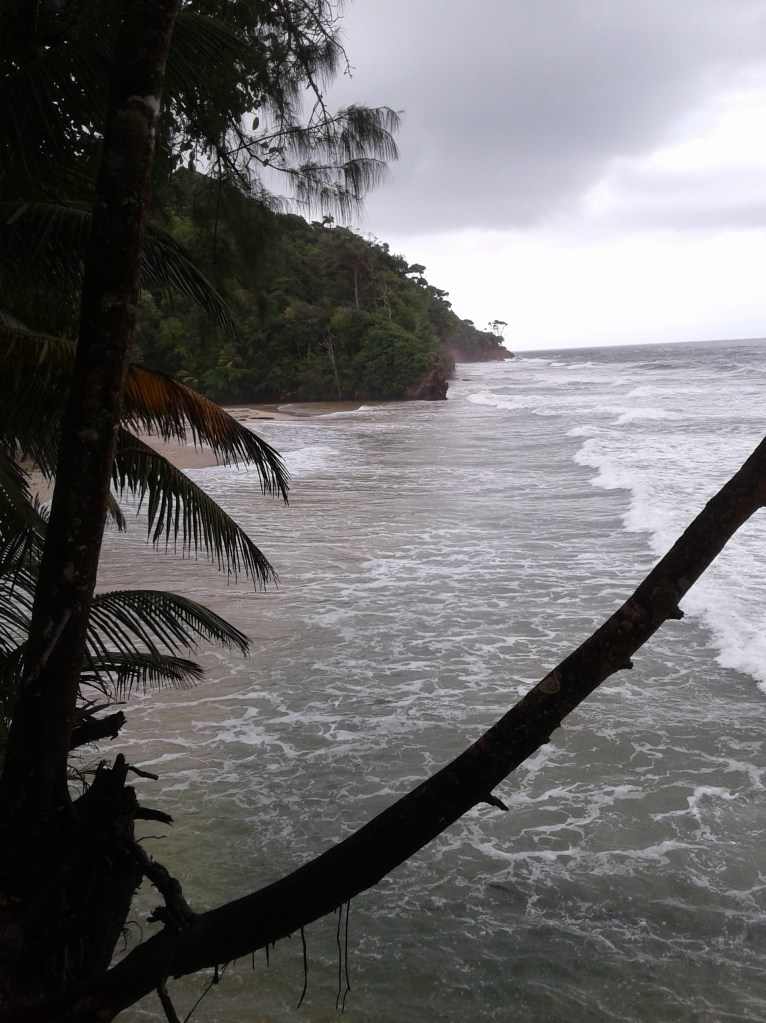
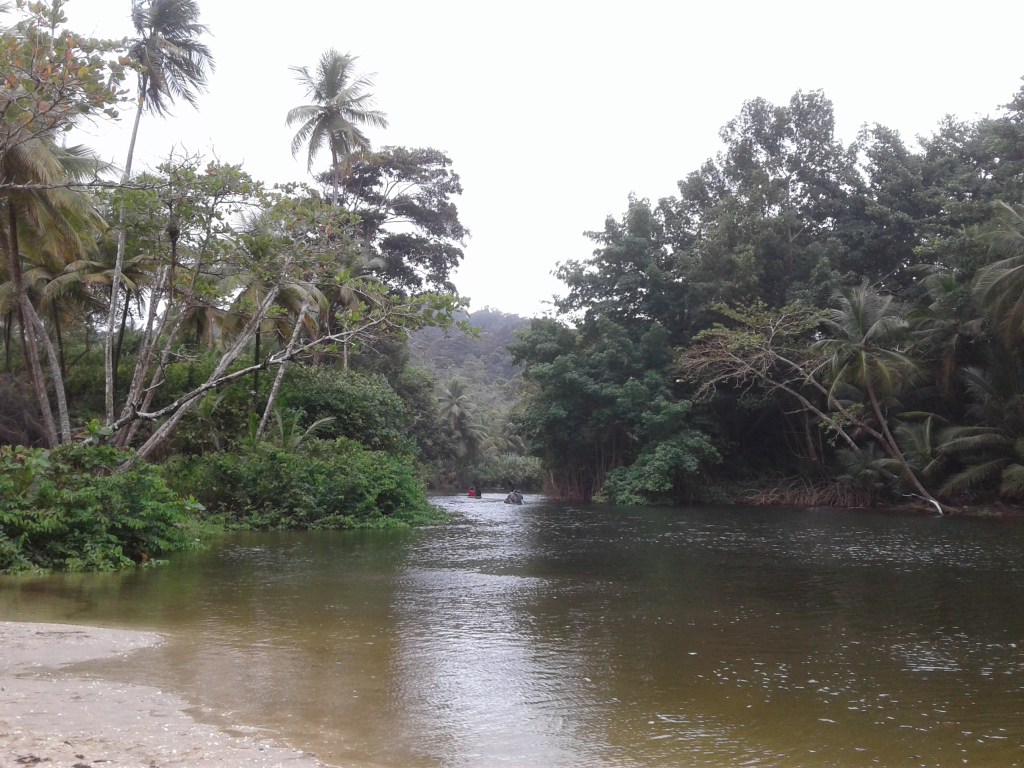
I also went “hiking” to a waterfall. I am sorry that I don’t have photos of that experience because it was exceptional. The hike was not very long. It started in very muddy terrain, and eventually, we had to swim through the river to get to the fall – that is why I could not bring my phone (I don’t have a waterproof case for it). My first swim-hike! The fall, Avocat waterfall, was like a spot in paradise. A pool forms underneath it in which you can swim, and when I did, the sun came out and transported me into a different world. Perhaps good I did not have a camera – it would have been impossible to capture that beauty.
I wanted to continue with some history and combine that with photos from another excursion toward the central part of Trinidad, where the Indian Trinidadian population lives. Remember that in 1838, enslaved people were “emancipated”. But the plantation owners still needed cheap labor to make profits. Eric Williams writes interestingly about the West Indian planters’ inability to make their operations more cost effective through modernization. They basically very loudly complained to the Crown and got a lot of support to keep doing what they had done before. Which was: exploiting people as much as possible and getting rich off of it. The emancipated former slaves were supposed to stay on the plantations as wage laborers, but most of them left and came back to work only sporadically (when they WANTED), which was not to the liking of the plantation owners. In response, all kinds of schemes were undertaken to help the planters get cheap labor through immigration. The first attempts didn’t work, mostly because the people who came to Trinidad were not the kind of laborers that the plantations required – in other words, they were not numerous enough and could not be exploited sufficiently. Among these immigrants were people from the neighboring islands; freed slaves from Spanish/ French slave ships that did not oblige to the ban of the slave trade (the British captured these ships, freed the slaves, and then convinced them to come to British colonies); even some Europeans and Chinese workers. But finally, eyes were set on a thus far untapped “resource” within the British empire: workers from India. While they were far away and the passage was expensive (the planters only had to pay a part of this cost), they were abundant in numbers, assumed to be adjustable to the climate, and of course: they were brown, the kind of humans that from the European point of view could be shifted around like any other means of production.
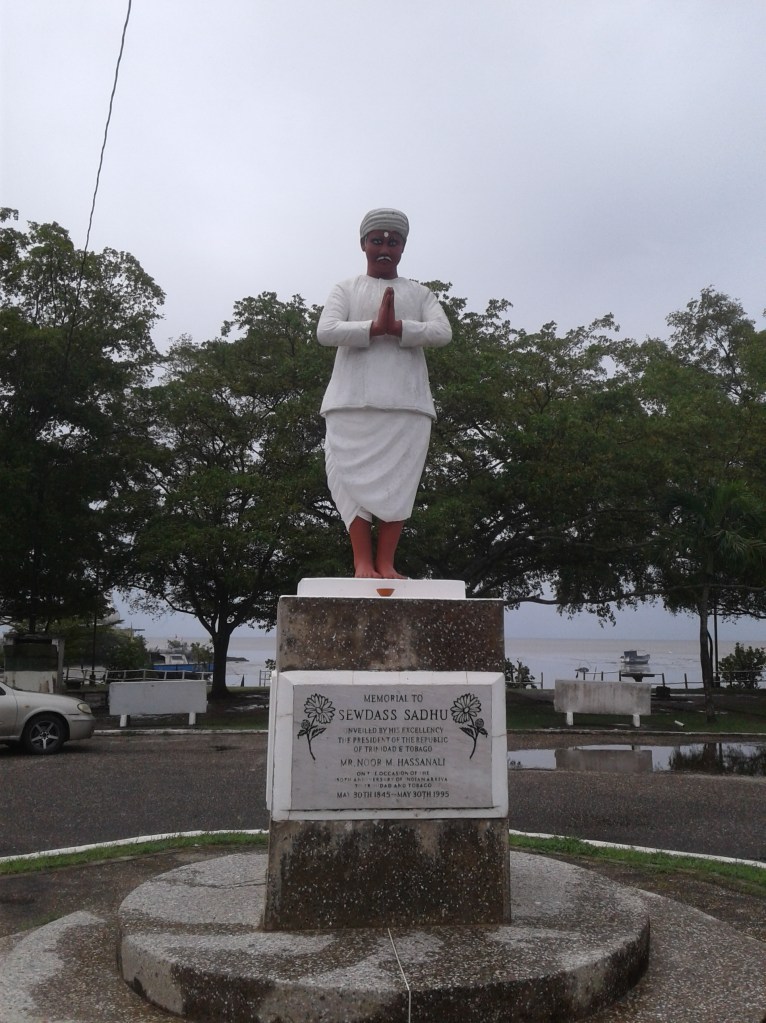
In the 1840s, a massive import of Indian workers ensues. On the photo, you see underneath the statue (the person honored is the gentleman who started building the Temple in the Sea, more on that below) an inscription pointing to “Indian arrival” in 1845. In retrospect – this statue was erected in 1995, to commemorate the 150th anniversary of that arrival -, it might be appropriate to use such a neutral term, because today, Indo-Trinidadians are fully “mainstreamed”, so to say, into Trinidadian society. However, at the time, Indian workers came to Trinidad through indentureship. They had to work for several years to pay their debt off, and then some more for their return passage or, alternatively, because organizing these returns was getting too expensive, for getting some land.
I don’t have enough knowledge to adequately describe what this massive population transfer has done to both the people transferred and to the island society. However, just a few points (my source is, as in the previous history post, Bridget Brereton): first, indentureship was ended in 1917, and by then, almost 150,000 Indians had been brought to Trinidad, representing about 40% of the population. A very significant part. As in other guest worker schemes (looking at Germany in the 1950s here), the assumption was first that people would return home when they were no longer needed, but that did not happen as expected. Second, indentured Indian workers were treated about as badly as slaves before them. They lived under terribly crowed housing conditions on the estates; the labor was gruesome, and because the plantation owners were not all too concerned about their health, many suffered from diseases and died early. The workers who came were mostly male, about 80%, but that meant that Indian women also came. They typically had to do labor as hard as men but were paid less (once they were actually paid). Third, for a very long time and beyond indentureship, Indians in Trinidad formed their own collective and did not mix with anybody else. This was partly because they were seen as a separate entity by the Creole society (consisting of white, colored, and black Trinidadians – the kind of society that slavery produces). Remember that this Creole society was brutally hierarchical, but everybody within that hierarchy, no matter what status, considered the Indians the lowest of all. Fourth, it was possible for the Indians to remain separate because Indian men did not intermarry with non-Indian women. Some indentured workers came as married couples, but many women also came on their own, and they were, as you can imagine, in high demand. This produced an interesting dynamic, because the women could leave a partner and easily find a new one; or stay in a marriage and have affairs outside of it. However, under the gruesome conditions, this did not only mean “choice” for the women, but also led to a lot of violence, including frequent wife killings by desperate/ abandoned husbands.
The 20th century brought many drastic changes for Trinidad and Tobago, in particular, the discovery of oil and a complete economic transformation away from agriculture; the rise of organized labor, which is the starting point of political organizing and of a truly emancipated collective identity – about 100 years after emancipation on paper; and finally, the creation of an inclusive nationalist identity that leads to independence from the United Kingdom in 1962.
I will not go there today; it is too much, as fascinating as it is. Let me just say that within this mix, the Indo-Trinidadians have steadily expanded their societal standing. I have heard often that they are still not politically as well represented as the Afro-Trinidadians. This makes sense if one considers that PNM (the People’s National Movement), the party created by Eric Williams that led the country into independence and then was in power the first three decades afterward, drew much more strongly on the Afro-Trinidadian population. However, Indian political representation has caught up. From 2010 to 2015, Trinidad and Tobago even had their first female Prime Minister of Indian descent, Kamla Persad-Bissessar. She is currently leader of the opposition, and you don’t want to mess with her. Beyond politics, Indian influences are integrated and powerful in every aspect of society. In the different food staples – Indian farmers were the ones who introduced rice as a new crop here – and dishes (I still own you a post on the food, I know!), as well as through religious traditions including Hinduism, Islam, and Christianity.
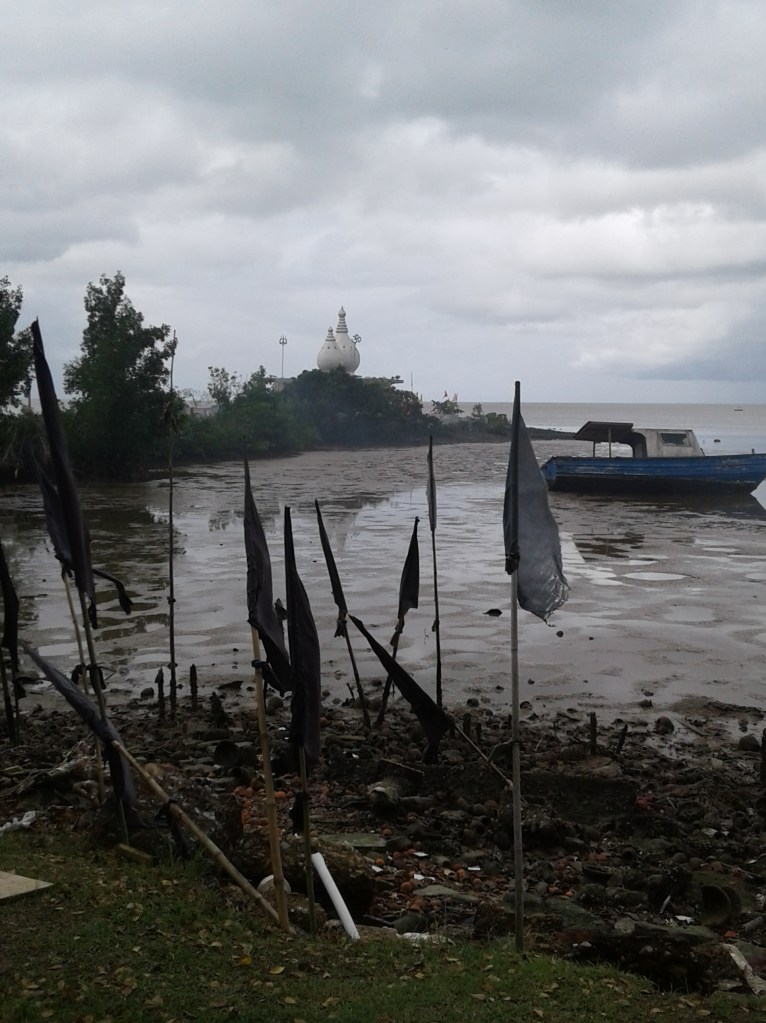
Therefore, my final impressions today come from two Hindu temples. The first is the Waterloo Temple in the Sea. It was first built on land by Sewdass Sadhu (see photo of his statue above) in 1947 but was bulldozed down because the land was owned by the state sugar monopoly. The man, however, persisted and built a causeway into the sea, because there was no permit required to build the temple there. I don’t think he saw his zeal come to fruition, as the temple was completed much later, in 1995, through a public works project. It is a very peaceful and serene place, and Hindu rites, including cremations pyres, are performed here.
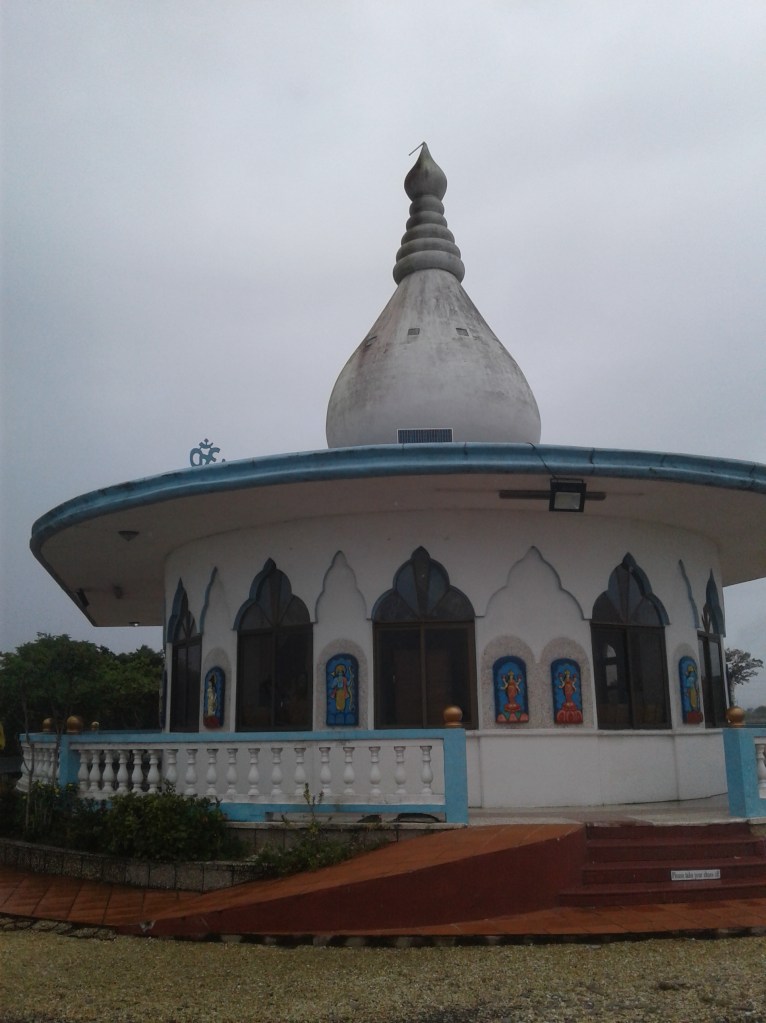
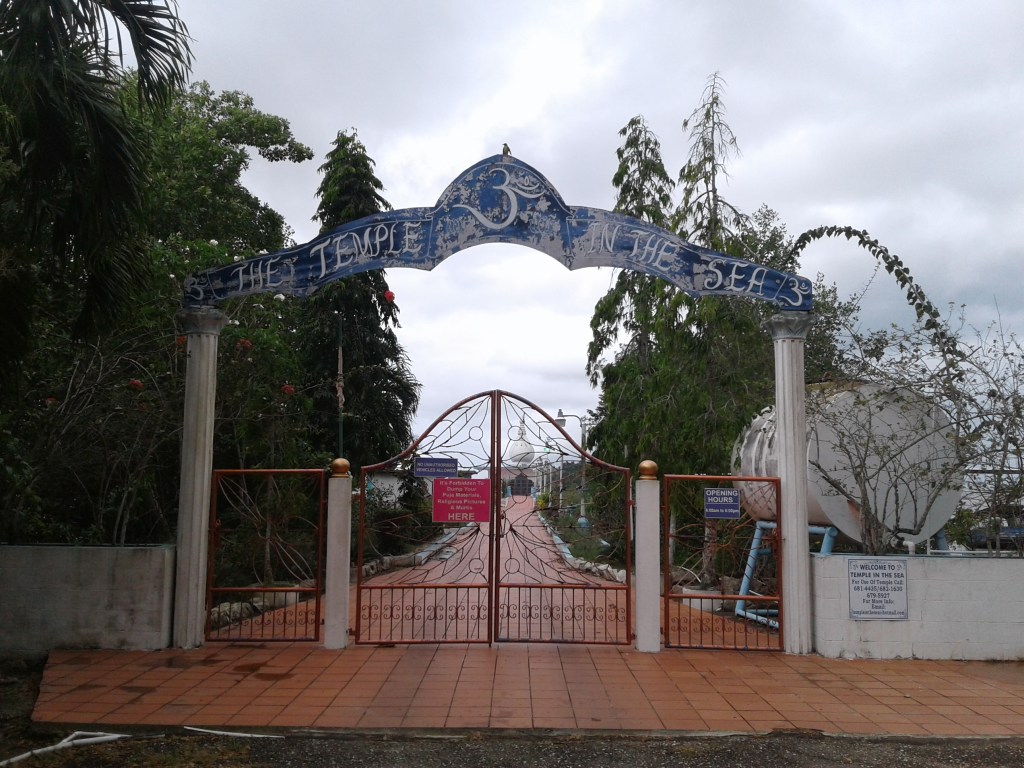
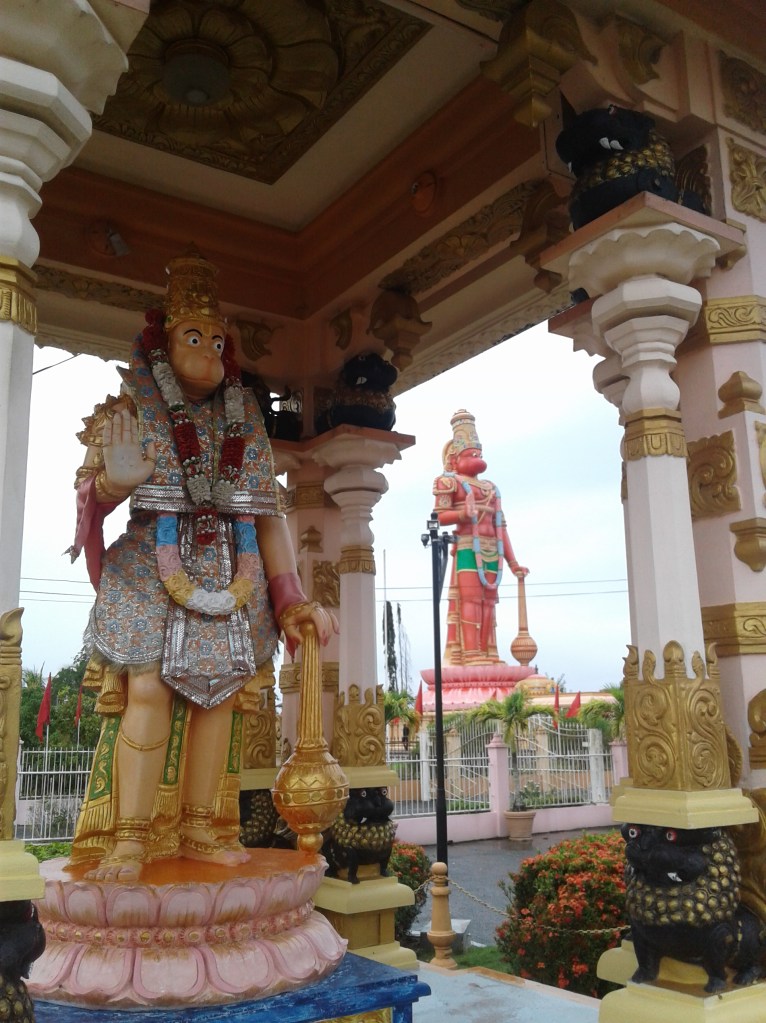
The other temple is called Sri Dattatreya. A huge statue called Hanuman Murti towers over its beautiful compounds. My rough guide says it is 26 meters high and “the largest representation of the Hindu monkey god outside of India”.
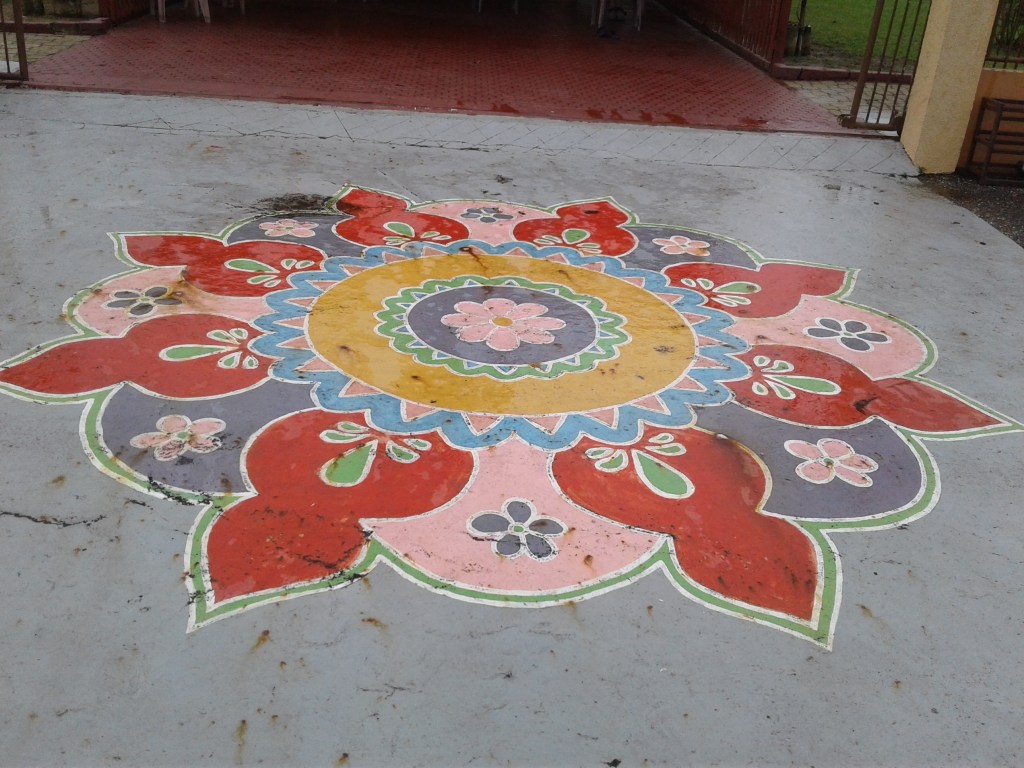
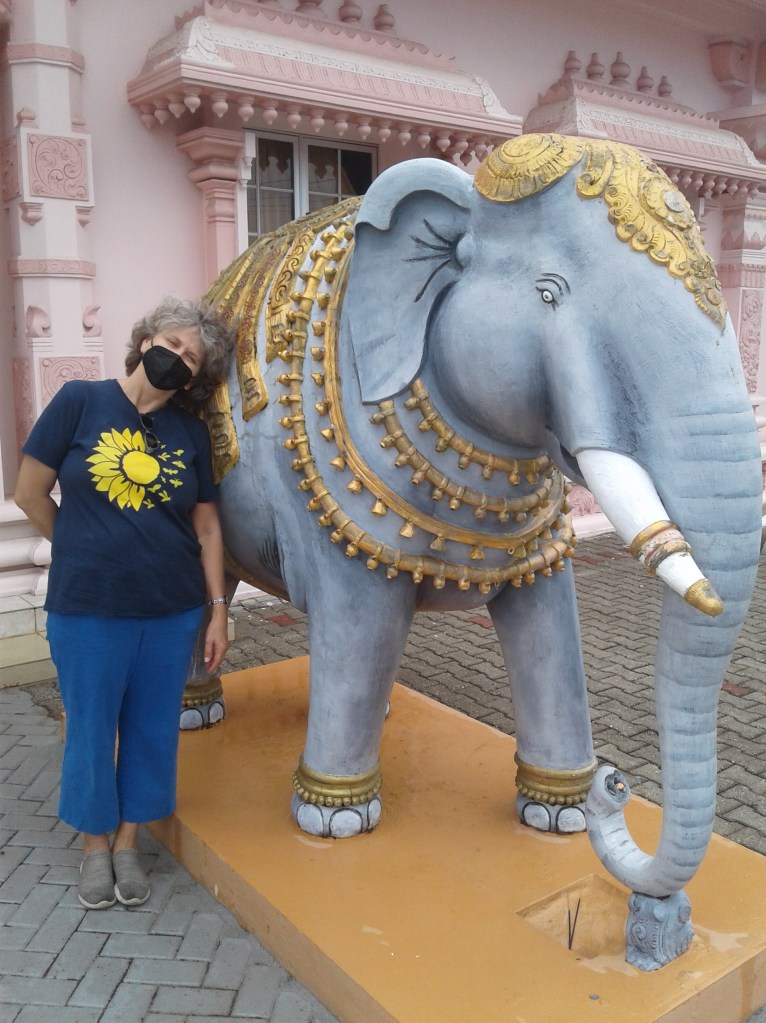
Also, as you can see, the temple is protected by elephants!
 The common sense feminist
This si truly beautiful and informative. Thank you so very much for bringing us clsose to your experiences. I look forward to more postings soon
LikeLike
Thank you, Felix. I feel honored to have you as a reader! Hope all is well.
LikeLike
LOVE the last picture. Perfect ending to this one.
LikeLike
Wow, a fine report! Thanks for the history, especially of the Indian-Trinidadian people. And the great photos. Question: If the north shore road is so narrow, how do you turn the car around when you reach the bridge?
LikeLike
Good question. In front of that bridge on the photo, there is a broader space for that. But in general, turning around a car on this road is a challenge and there are only a few spots where that can be safely done, as far as I could see.
LikeLike