First things first: I was overwhelmed in the best of ways by all your responses to my “first” post – it is great to see that my processing of things here means something not only to me, but to many of my friends. My favorite sentence came from Jennifer: “Hope you stay happy and healthy there, and know that some of us perpetually infected by the travel bug are living vicariously through you, so take good care of yourself and make the most of it.” If that is not encouragement to keep exploring, I don’t know what is!
Some time has passed since the last post; I think more experienced bloggers post at least once every week, so I owe you some. In the meantime, I am of course experiencing lovely things – remember the monastery from the last post? I am staying at the adjacent Pax guest house this weekend. Just for one night, a nice little treat.
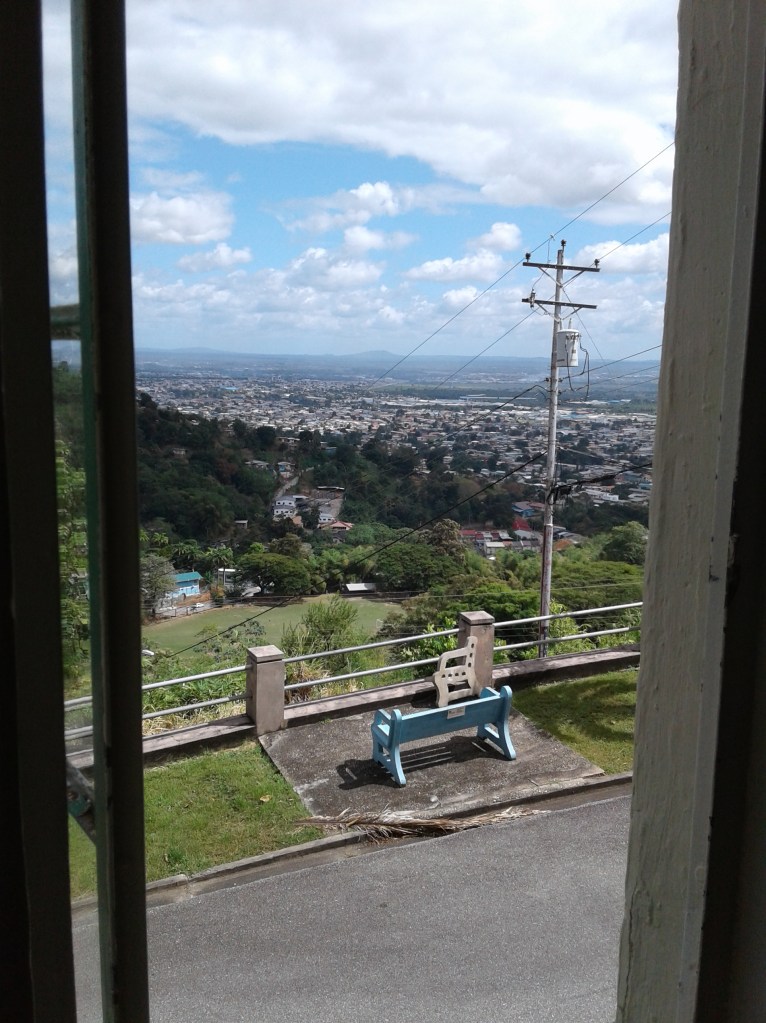
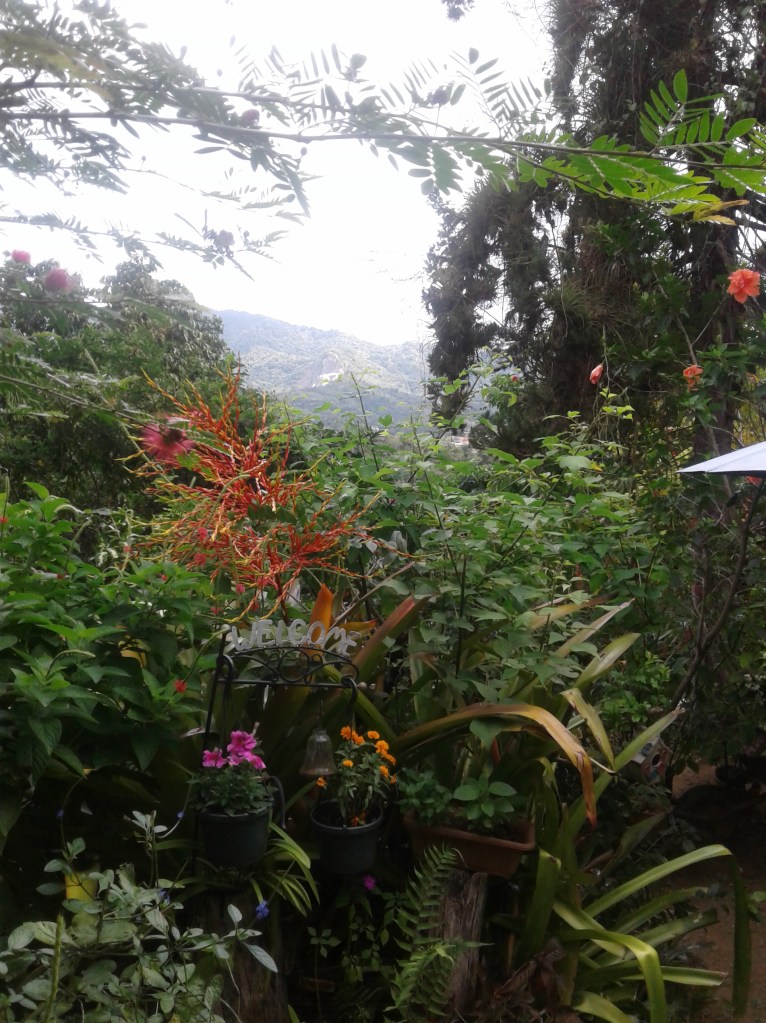
It is up in the mountains, beautiful and serene, and since I am the only guest right now, Gerard and Oda, the hosts here, take good care of me and we chatted through dinner and breakfast. It is strange with Covid: I contact places I want to visit, HOPING they may be open, and then I am so HAPPY that they in fact are. But the other end seems to have the same reaction, because hardly anybody contacts them anymore and they are happy about any business. This guesthouse, by the way, is not only a great stay in case you want to visit Trinidad (and very affordable), but also a place where important people have stayed before – even Fidel Castro, shortly after the revolution. Gerard seems to know many of them (not Castro). The person who most impressed him was Cheddi Jagan, transformative (to say the least) former Premier and later also President of Guyana and “father of the nation”. A true servant to his people, and apparently, that showed in his personality when he stayed here at the guesthouse. Others seemed to have been less impressive. Prince Charles, for example.
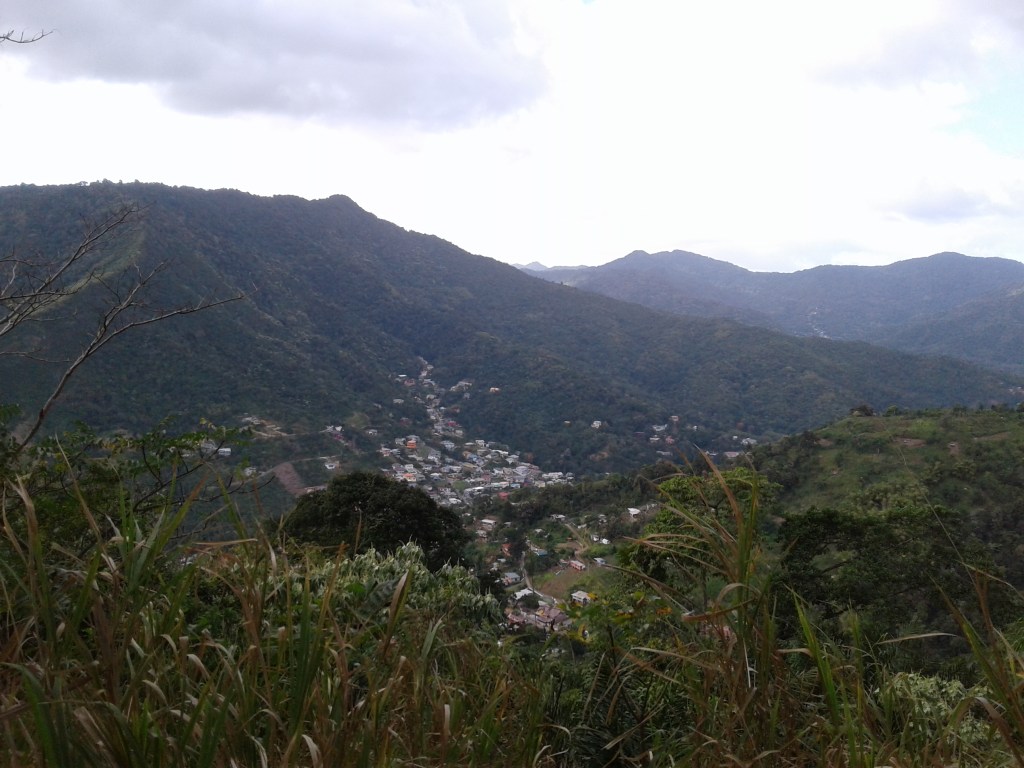
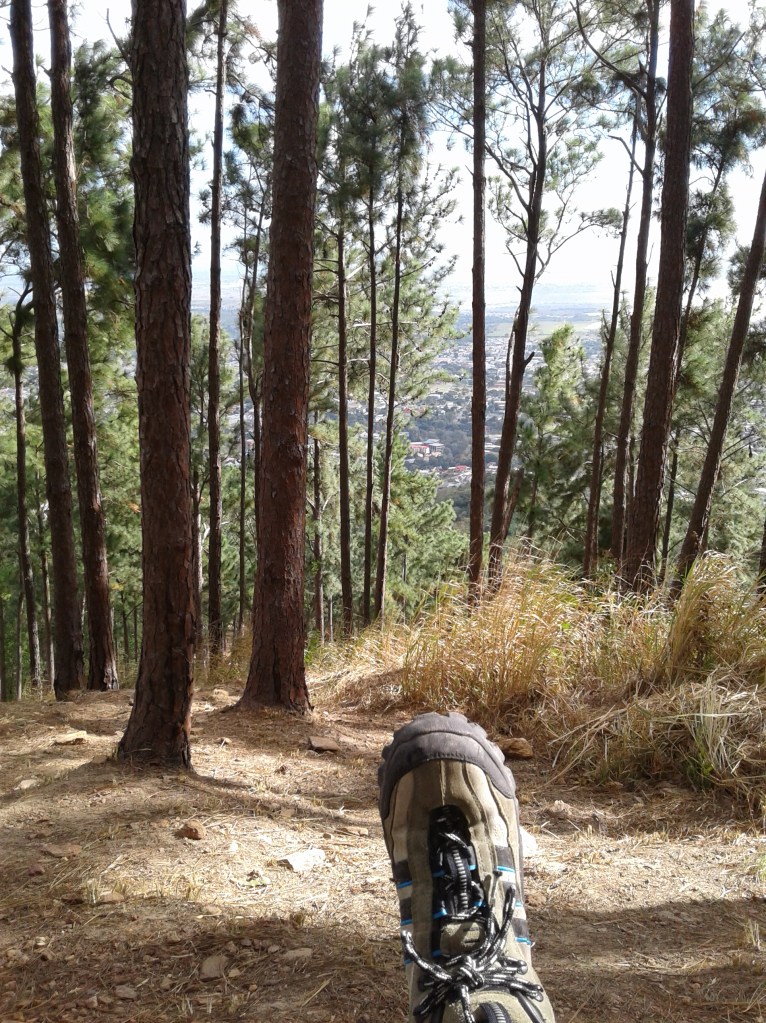
One wish I have had since I came is to go on a hike. My Fulbright buddies told me clearly that they don’ t hike, so what do I do, go alone, as a (white) woman?? Difficult, as you already know. What would be a safe place to do that, if any? Perhaps the part of a mountain close to a monastery. This is why I came up here. Gerard, when he heard about my plan, did NOT like it, but deemed it doable. He gave me a walking stick (I think for self-defense, but it was fantastic for knee support). He also said there will be many people around. I started my journey and did see two or three people. The hike up was not very long, but strenuous. I plugged along, controlling my breath to make it up to the top – when three young men passed me. One said: “You are an inspiration to me.” I responded, breathless: “So are you, to me” because they were so much more energetic than my slow self. I asked him later what inspired him about me walking up there so slowly, and he said in a very honest and friendly way – that I try things even if they seem hard, and that many people don’t do that and lock themselves into limitations that are not even there. Along those lines. I felt very appreciated. Later he took a photo of me on the top – as you can see, next to the flag (that is the flag of Trinidad and Tobago, in case you did not know).

I felt very much at ease, on the top of the mountain with some strangers, and then, several more people arrived. I first did not see any women among them, only men, and wondered for a second if I was now in an unsafe situation. It turned out the opposite was true – this was a hiking group of perhaps 12 people who invited me to come with them, which allowed me to see another trail that I would have never embarked on, and I felt very safe among them. I had the perfect hike and got some great information. I also noticed protective behavior of some men in this group either towards the women in the group or towards me – helping over big tree trunks, for example. I am not used to this, but it was not unpleasant. Just really caring.
However, I do feel sad about the fact that this thought (am I in danger?) even had to cross my mind. I don’t mean this as a guilt trip. The point is a) everybody constantly talks about danger, and preparing against it is something that Trinis do themselves all the time; it is not just a tourist thing, even if I am exposed to specific risks; b) murders are in the news daily; I guess in a small society, a dead person is not just a number, so you typically get the most gruesome stories; point being: there IS, truly, violent crime, and c) I really cannot read what is going on yet. These people were wonderful, but that is not always so clear. For example, the taxi ride up here. Remember that you have to be careful when getting into taxis? I have become, in the meantime, a seasoned rideshare user (this is deemed a safer way of travel than taxis), but this time, I took the taxi up again. That driver was driving very aggressively, on steep inclines with narrow curves and potholes. And no seat belts.
So, violence. Many different forms of it. As a tourist, I think the most dangerous is being robbed, and of course things can go wrong in a robbery. But within society, many people are at risk of becoming victims of violence, as far as I can tell mostly young people. There is a concentration of that in poor neighborhoods due to gang violence. Young women, I am sorry to say, are at particular risk of gender-based/ sexual violence (older women also, but in a different way). Where does all this violence come from? That is a big question with many answers.
One answer points to the country’s history and the deeply ingrained structures of violence and exploitation, and with that, the lack of valuing human beings. Or I should say EVERY human being EQUALLY. That is characteristic for the entire Caribbean due to the long practice of enslaving people, but is manifested in specific ways here, because the phase of slavery was rather short in Trinidad and then replaced (or extended) by indentureship (and Tobago has a different history). More on history another time, but it is interesting how this violence stays in a society; it has not been long that corporal punishment was forbidden in schools and using physical violence to educate children at home still seems to have a lot of currency. Another answer is blatant inequality, so the better-off protect what they have and (some of) the desperate try to get a part; but that does not explain theft from relatively poor people, except perhaps that these people don’t have the resources to protect themselves and their belongings (fences, barbed wire, cars, etc.), so it is easy to rob them. Of course, you know what Covid has done to already existing inequalities. Another answer is impunity – it seems easy to get away with murder, literally.
I leave you for today with this discrepancy as I have experienced it so far: on the one hand, friendly, responsible people whom I can relate to with ease; whom I trust and feel save with. On the other hand, people who represent real danger. Is it odd? Hell, yes because how do I know the difference between these two groups? I guess my German friends are shaking their heads – I at least have not grown up with such risks, and I think that feelings of relative safety do have a lot to do with wealth redistribution, existing safety nets, and reliable law enforcement. And of course, the neighborhood I grew up in which was affluent, safe and un-gated.
And a final, final thought: On my way up, I was stung by some kind of a bee. It was odd, because it hurt much less than the bees I am used to, so I could continue, but it was a very aggressive bee. What if I had had an allergic reaction? Note to myself: it really is NOT a good idea to go hiking alone.
Not here, and not anywhere else.
 The common sense feminist
Dear Susanne, you really have a gift for (non-academic) writing! Glad you got out hiking, it looks marvelous-and seems like it was a good opportunity to learn about ‘Land & Leute’. Sending a virtual Valentines hug!
LikeLike
Lieber Markus, schoen, dass Dir der post gefallen hat. Ist doch super, wenn ich zumindest ein NON-academic writing gift habe, oder? Dir auch a BIIIG Valentine’s Day hug.
LikeLike
hahaha…not easy to be able to do both kinds of writing (I failed doing so). In any case enjoy and be well!
LikeLike
Freue mich für dich, dass du doch Gelegenheit hast, ein bisschen rauszukommen und ‚exploren‘ 😊
Viel Stoff für unseren virtuellen Kaffeeklatsch, vor allem der Gedanke zum Thema Normalisierung von Gewalt im Alltag (ahem, gendered aspects natürlich) beschäftigt mich. Auf baldiges Hören,
Mic
LikeLike
Schoen, dass Du zum Lesen Zeit hattest. Ja, viel food for thought – ich freu mich auf baldiges fernmuendliches de-briefing.
LikeLike
Hello from Miami – your Fulbright liaison and German friend. Exciting to read about your hike. Safety vs adventure, always a tough one. Please keep them coming, including the tips for wonderful housing opportunities. Such insider tips are priceless.
Also! I am hoping you might be willing to participate as a facilitator for the Fulbright Pre-Departure Orientation Western Hemisphere, which I suppose you completed through St. John’s University last year. FIU is submitting a proposal to take that over for the next years (up to 5). Can I count on you?
LikeLike
Dear Susanne, thank you for sharing with us your experiences and impressions in Trinidad. The pictures and your narrative are remarkably captivating. I concur with our friend, Markus: you certainly have gift for descriptive and bucolic (in the rural sense) writing. I stay tuned for your next post. Happy times in Trinidad! Félix
LikeLike
Happy you like the blog, Felix!
LikeLike