For those who prefer to read in German/ für alle, die lieber auf Deutsch lesen wollen: copy and paste the text into https://www.deepl.com/translator.
Last September, after our return from summer vacations in Germany, I had wanted to write about my outsider-insider or, as I like to call it, transnational view on my home country, but rather went in a different direction in this blog post on my transnational life here in the United States. What I wanted to share is the experience of re-discovering things that were familiar to me because I grew up with them. Coming back “home”, I was now seeing them anew, partly because of all the other-than-German influences in my life, but partly also because the national self-perception and historical narrative in Germany has evolved and keeps evolving. I am sure that all of you who live in a country where you have not grown up have comparable experiences.
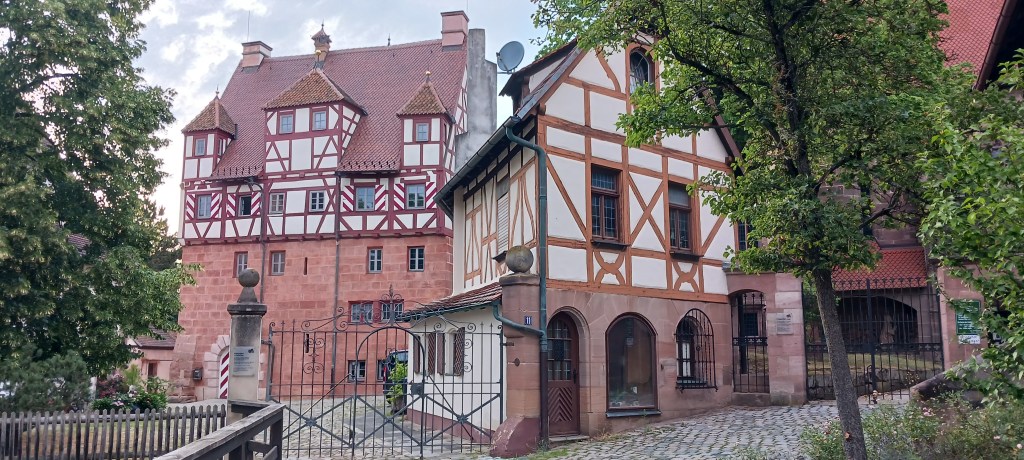
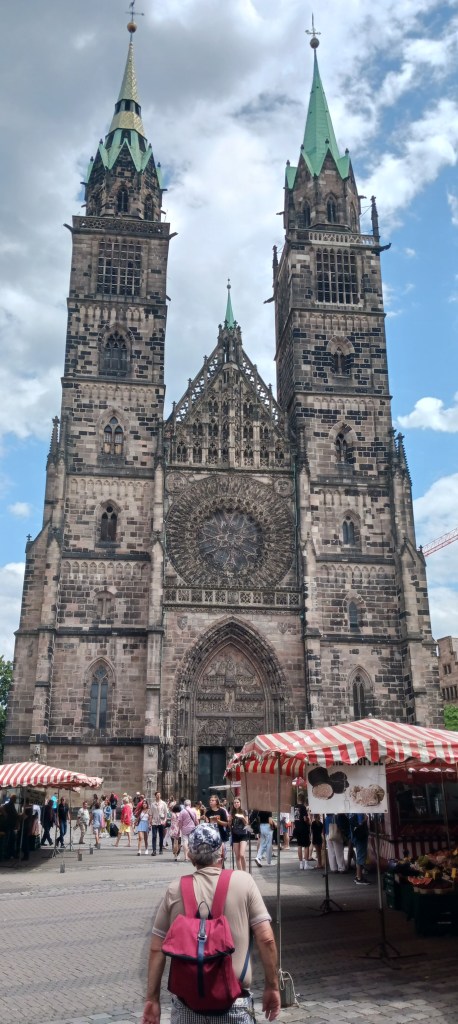
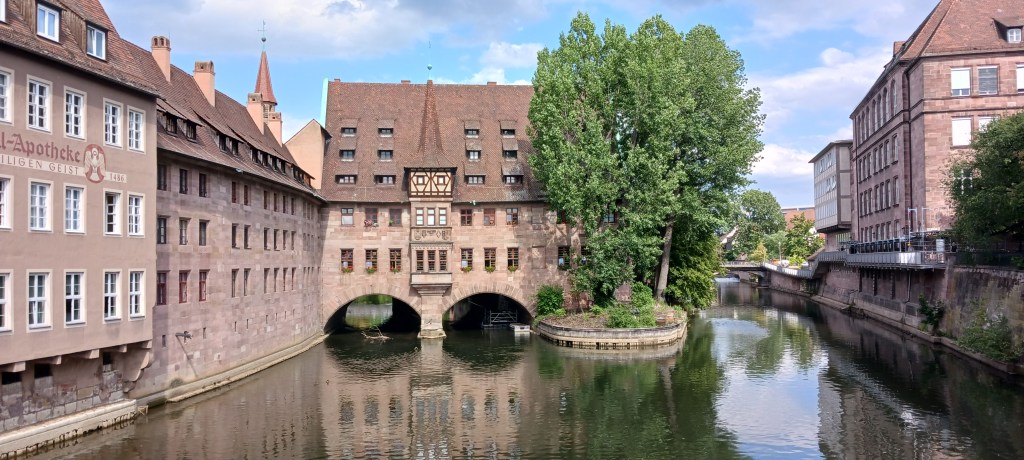
One dimension I was particularly keen on was the fascist history of Germany in its concrete manifestation in my hometown Nuremberg. Some of this is very well known. Nuremberg was the site of the Nazi party rallies, a core instrument to stage and display enthusiastic mass worship for Hitler. Partly for that reason, it was picked as the place where the Nuremberg war crime tribunals took place, a milestone in the development of international law. There are many more facets: The major propaganda organ of the Nazis, “Der Stürmer”, was produced here; the so-called Nuremberg laws which stripped Jews of German citizenship (and many other things) were announced here in 1935; also, Jews who had lived all over Bavaria were locked into internment camps in Nuremberg (actually ON the party rally grounds) before they were deported to the concentration camps; after the war, these internment camps held displaced persons, including Jewish DPs.
People in Nuremberg have some awareness of how fascism was embedded and embodied here, perhaps not in a comprehensive, but in a significant way. Over time, authorities have invested in making historic sites visible and accessible and creating learning opportunities about the past – as so very often, this happened because some tireless individuals kept pushing, not because of a general conviction that it was necessary. But slowly, it became a mainstream thing. For my generation, it was considered normal to learn about the Nazi past in high school. This was in the 1980s, and I am talking about West Germany (East Germany was very different, as it dealt openly with the fascist past from very early on). I remember a guided tour on the Nazi party rally grounds, by then a memorial monument, in 10th grade; in the 1980s, one of the buildings on the rally grounds held an exhibition titled “Faszination und Gewalt” (fascination and violence) which dealt with the Nazis rise to power, their propaganda machine, the role of mass spectacles in it, and other things. It later became a permanent exhibition and can now be virtually accessed in German and English here.
I learned a lot in this exhibition, but the point I want to make is: I thought, in the mid-1980s, that all the historiography and public education about Nazi crimes was normal, when in fact it was just getting off the ground. This exhibition was the first of its kind; the Nazi party rally grounds were long not understood as a crucial historical site, they were rather just sitting there, until the 1980s, when the city thought to do something meaningful with the complex. This resulted eventually in an informative and thoughtful documentation center (Dokumentationszentrum Reichsparteitagsgelände) which opened in 2001. For the country as a whole, a 1985 speech held by then President Richard von Weizsäcker marked a turning point: he used a commemoration of the fortieth anniversary of the war’s end to declare that while Germans had suffered in the war, they should understand themselves first and foremost as perpetrators.
Just to be clear: there was a 40-years lapse before this active engagement with the Nazi past unfolded. That seems like a VERY long time. In Nuremberg, this engagement has become an important part of the city’s identity. When I now visit, I notice a growth in the memory infrastructure – more dimensions are being remembered, in museums, specific memorial sites, historical tours, etc. It got me excited about bringing students here for a study abroad program on memory politics and human rights (Nuremberg has also declared itself a Human Rights City). I am thinking about it, and partly I am doing this here, with you, asking for advice; do you think students might be interested in visiting sites where genocide was planned and carried out, and where these crimes are now remembered, to honor the dead and to help prevent such atrocities from happening ever again? Please let me know.

Germans have a reputation of being particularly proactive at remembering their past. In her 2019 book “Learning from the Germans: Race and the Memory of Evil” Susan Neiman translates the term we use for this – Vergangenheitsbewältigung – as “working through the past”. Her book speaks in approving terms about this process, which has different strands in East, West, and united Germany and is not without problems, but stands out when compared with how other nations have dealt with their own past crimes. Specifically, she compares Germany to the United States and the absence of any “working through” the legacy of slavery.
Reading this book felt good. But since I read it, history has continued its path in a way that made me more uneasy about memory culture in Germany. In particular, I follow with attention and concern the public discourse in Germany since the Hamas attack on Israel and subsequent retaliation of Israel on Gaza (in my November blog on this topic, I did not call Israel’s deeds genocide; in the meantime, so many people in Gaza have been killed and are being starved that it is hard to call it otherwise). The German public discourse on this is at times frightening, but again relying on Susan Neiman’s assessment, this trend has started several years ago. I appreciate the historically unique German responsibility to condemn antisemitism, and to do everything to prevent antisemitic violence against Jews and Jewish places of worship and gathering. Jews need to be and feel safe in Germany. But it seems to me that at the current historical moment, the responsibility for the deeply rooted antisemitism associated with Germany’s own fascist past gets less attention than needed, and instead, there is a lot of Islamophobic finger pointing at the antisemitism of immigrants from the Middle East, combined with a troubling conflation of any criticism against Israel with antisemitism. Supporting Israel has become German Staatsräson (=reason of state) and the test immigrants must take to acquire German citizenship now includes “questions on the Jewish religion and the state of Israel in a move designed to filter out anti-Semites among applicants.” According to the Minister for the Interior, “Anyone who does not share our values cannot get a German passport” (see here).
In her book, Neiman eloquently talks about the commendable and difficult work that Germans have done over time to overcome very deeply rooted, normalized and everyday antisemitism – it is not gone, but it has been significantly transformed (those of us who study gender hierarchies might see a parallel – sexism is not gone, far from it, but it is also not what it was in the 1960s). But German memory culture now seems to focus on doing memory right, and majority-Germans are quick to remind immigrants, in particular non-Jewish immigrants from the Middle East, that there is a certain standard they must accept when they decide to live here, among “us” and “our values”. And while the German responsibility for the Shoah should never be relativized, this attitude is rather self-righteous regarding other people’s experiences. Accordingly, this can become a rather exclusionary and even racist discourse, where correct anti-antisemitism is the German kind and no other.
I remember a concrete moment in my life when I EXACTLY embodied this attitude. It was in the mid-1990s, I had a Turkish boyfriend, and we went to see “Schindler’s List”. While I think of this movie rather critically now, at the time, it touched me profoundly. On a human level, this is not surprising, because the deeds of Schindler allowed so many people to live, in this dark ocean of extermination of millions. Seeing this movie as a German person, I felt a connection of guilt. After all, my country did this; my grandparents lived while this happened. But there was also a connection of hope – not everybody was a perpetrator or indifferent enough to let the catastrophe happen. So, I was very emotional as we came out of the theater. My boyfriend wasn’t. And he said something along these lines: This is a story of the past. We need to understand that terrible things are happening in the present, like right now, the Kurds in Turkey are being treated almost as badly. I stared at him incredulously. Not only did I immediately diminish and push aside whatever was being done to the Kurds at that time, of which I had very scarce knowledge. I basically decided that he “did not understand” the significance of this historical catastrophe, which had to be accepted as incomparable. And while I did not think this in explicit terms, in my mind, the “full understanding” of this matter had a lot to do with being German. Which he wasn’t.
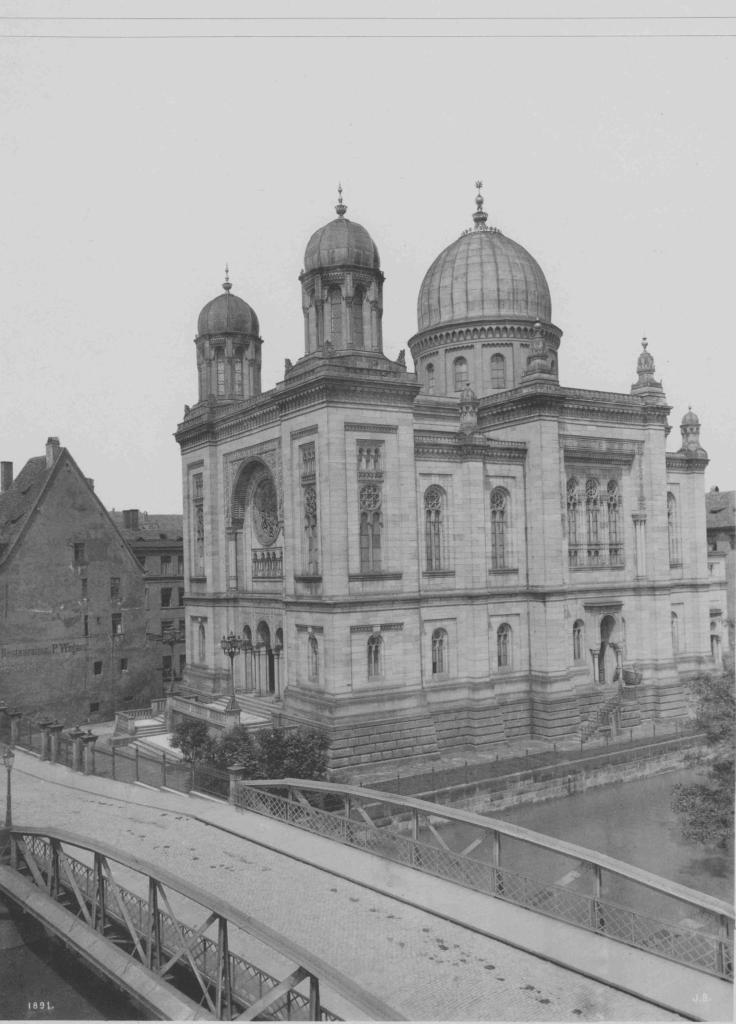
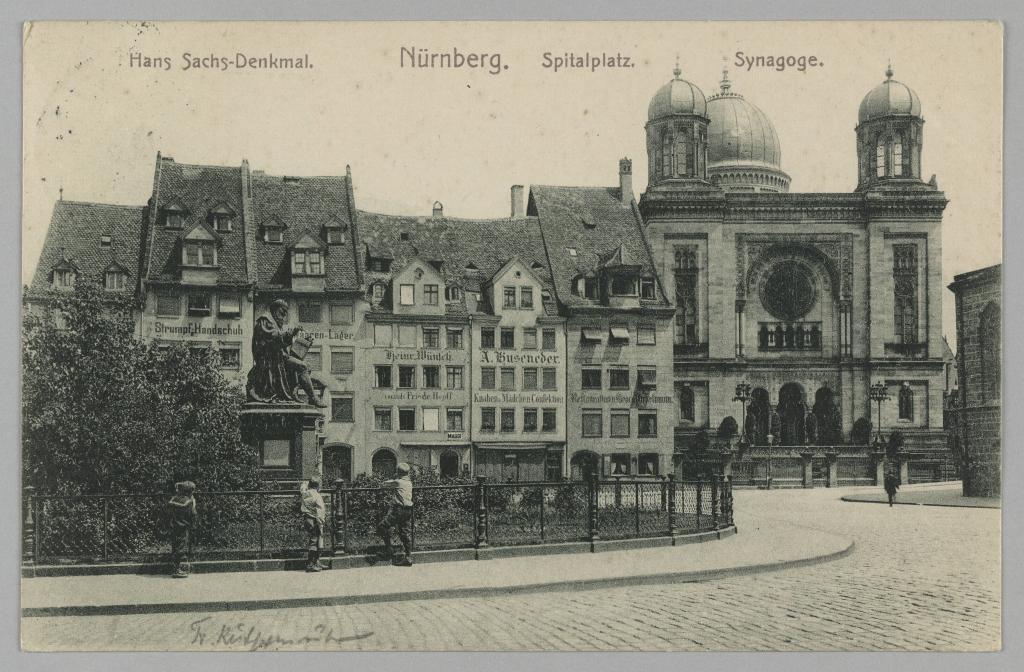
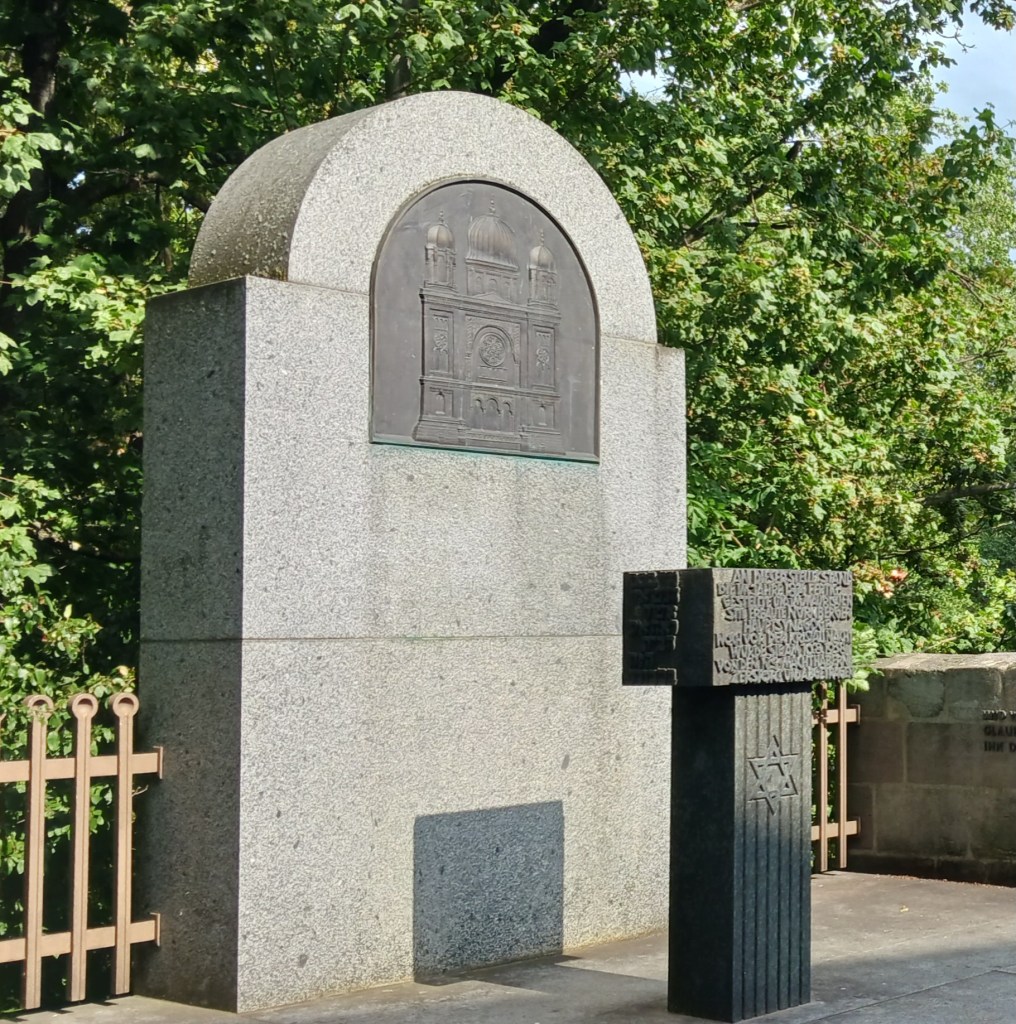
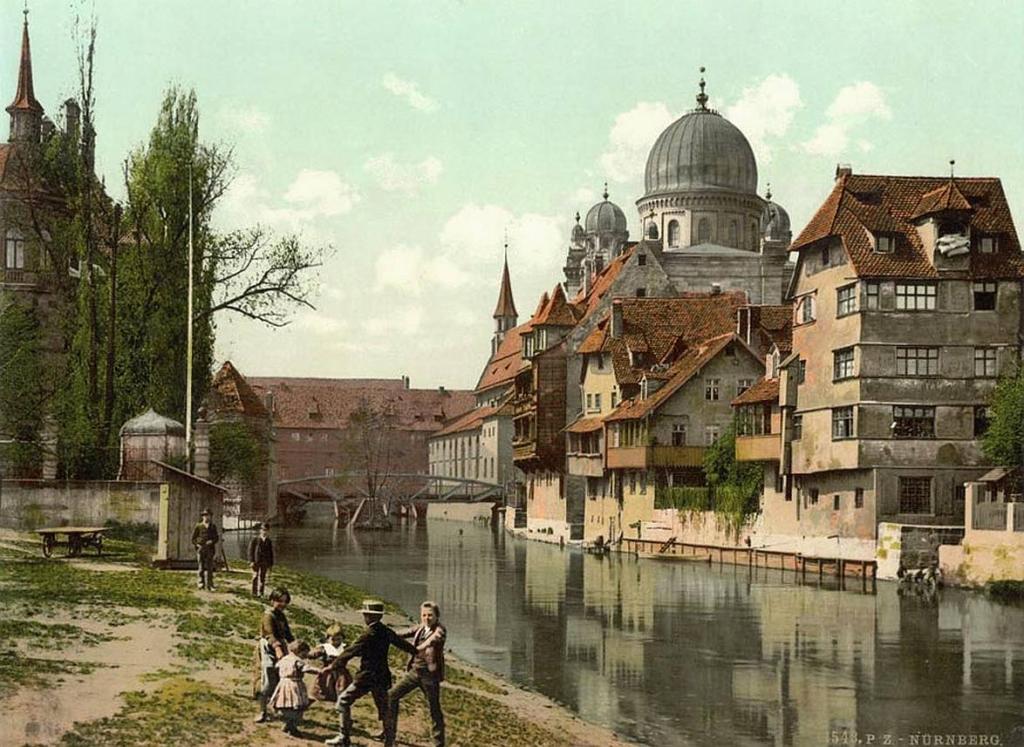
I will stick to this subject of memory culture in future blogs, as there is so much more to talk about. For now, I want to end with one realization. Much of the important “working through the past” dynamics have focused a lot on German crimes, and not very much on the Jewish lives that were erased, the culture, the social fabric, daily life practices, language, forms of worship, artifacts etc. I only fully understood this when I first visited New York, a city full of vibrant Jewishness. All that had existed in my hometown, yet I had grown up in a normal that had erased almost all of it. A deep, incomprehensible void. The city has now erected plaques that commemorate important Jewish sites. Perhaps the most significant is the site of the main synagogue, erected in 1874 and demolished by the Nazis in 1938 (months before November 9). Below you see the contemporary memorial as well photos of the synagogue itself, taken around 1900. These photos are breathtaking to me. The building is majestic and beautiful, and it towers over the center of the city. What must it have been like to have such a proud place of worship, only to be systematically humiliated and dehumanized, step by step, into extermination and genocide.
 The common sense feminist