It is late March – for those of you outside of the United States: March is women’s history month here, just as February is Black history month – both traditionally times when events are organized to celebrate women and African Americans. This year, google has, for “apolitical reasons” stopped to mark these events, just as it has stopped to make an effort to hire employees from underrepresented groups, a policy that was once proudly touted as DEI (“diversity, equity, and inclusion”)-friendly, but as everything DEI is now vilified by the Trump government, what can a big corporation like google do but fall in line. Also, do me a favor and google “Gulf of Mexico” – it is now renamed “Gulf of America” on google maps, because the US government says so. If you have not yet moved away from google as a company as much as you can, now is a good moment – I recommend the search engine Ecosia which is deeply committed to climate action. Also, you still get the “Gulf of Mexico” if you ecosia instead of google it.
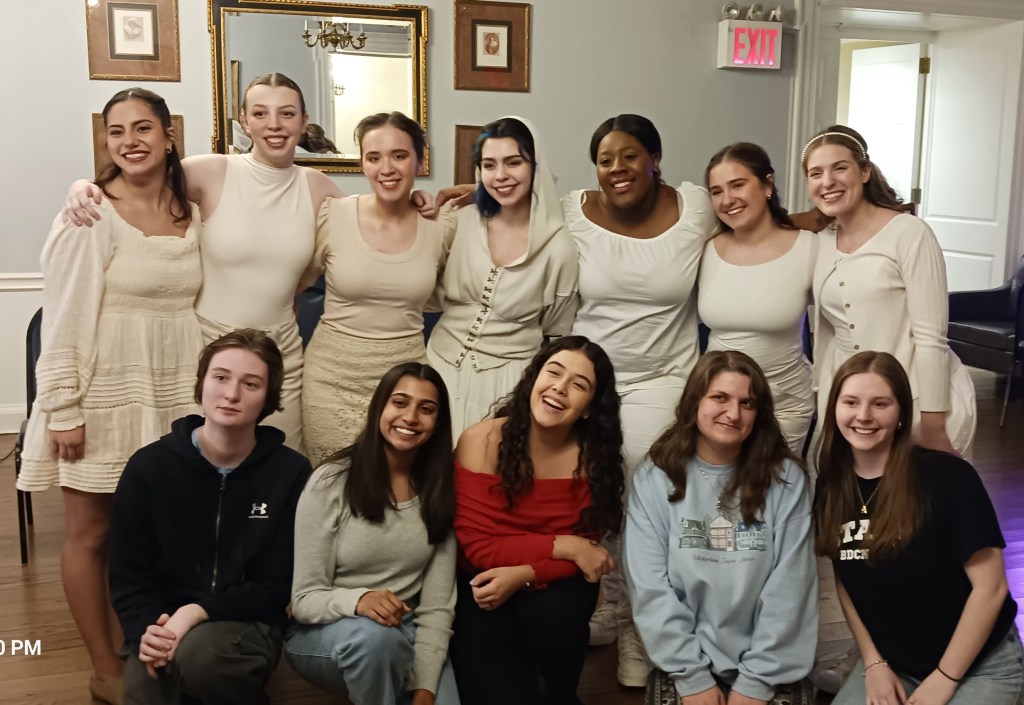
It may come as a surprise, but I’ve had a GOOD women’s history month. I was part of three powerful events: First (and best!), I saw a wonderful play, “The Nowhere Women”, written by Bella Panico, a fellow student of my daughter Celeste, performed by a powerful cast of young women and students at Marymount Manhattan College, including my daughter. It was gut wrenching, beautiful, and intense. It made me grateful for the wisdom and collective love of these young women – amidst everything that is going on right now, it made me hopeful for the future. Yes, it was THAT good.
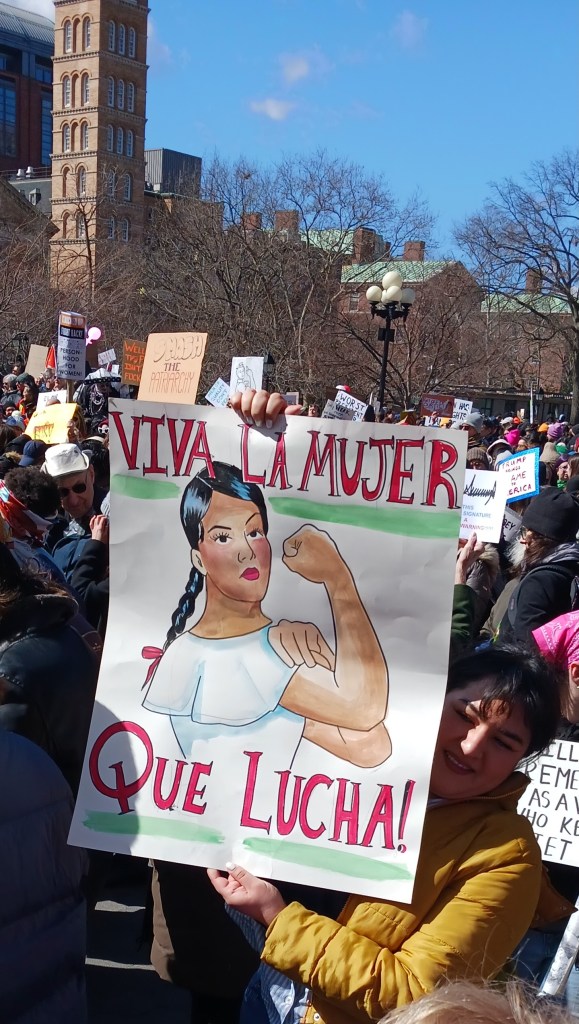
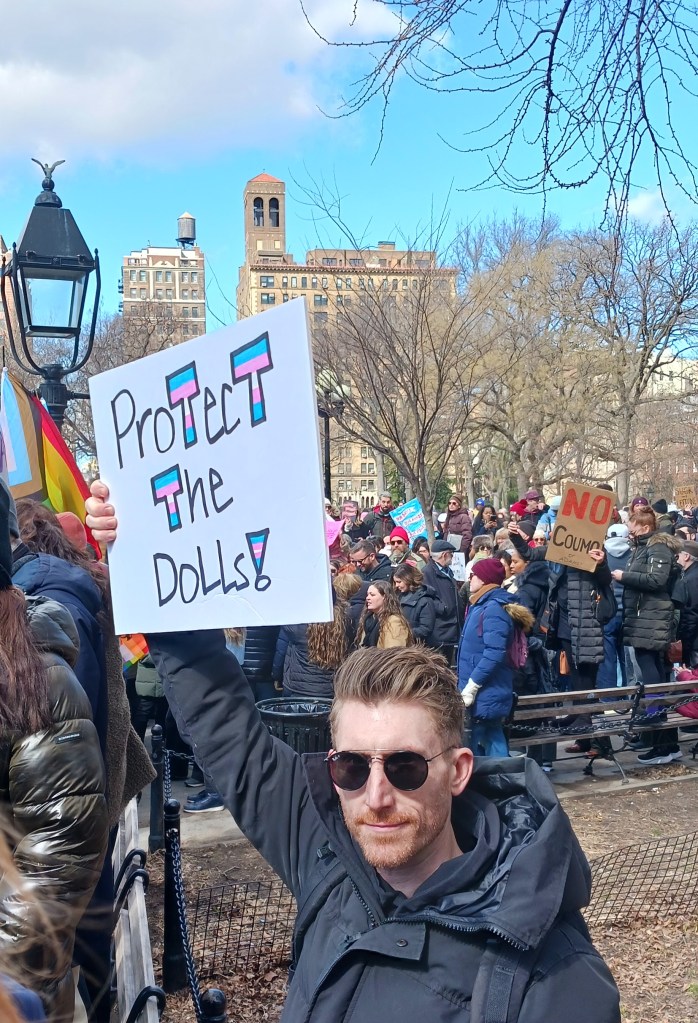
Second, as I was in New York for the play, I could be part of International Women’s Day march. I love marches, and this one was energetic, spirited, with great signs and many people, all shouting their outrage at the dismantling of US democracy and demands for all kinds of women’s rights.

And finally, back in Miami, I co-organized a zoom event titled “Doing feminism in higher ed – what keeps you going? A check-in session”, in which seven inspiring speakers shared stories, fears, and strategies. It left all 35 of us at the meeting a bit stronger for the struggles to come. And the ones that are already going on.
Speaking of checking in: several friends from outside of the US have been checking on me since – you know when. How are you doing? Where are the mass demonstrations? What is going on, in your space? Are you coming back/ leaving? …
So, it seems to be a good time to write down how things are feeling right now. Apart from the great experiences described above, this is a shocking, demoralizing and paralyzing time. There are so many deeply disturbing things happening, globally, nationally, in Florida, and locally, that I feel 10 times every day I need to do something about x, just to get my attention ripped away by y, which is equally terrible. More often than not, the only thing I do is inform myself, and then I am so exhausted that I do nothing, except my job (which, if I was right in the last blog and an earlier one on “helping young people think”, is also an important intervention in the fight for democracy).
I know I am not alone in this situation, so from those of you who are in the US, I would really like to know how you are coping. I am speechless while observing how little effort it takes to dismantle democratic institutions by a tech bro and his minions; as if no power and legitimacy had ever been behind them. Further, I have noticed that I am most emotionally affected by things happening close by (more on that below).

It is important to react to such things, but they are often not the ones that seem most urgent to care about. I feel powerless with the big issues – for example, the breaking of the ceasefire in Gaza, the resumption of the horror in full force. And all that comes with it, such as Trump’s publicly voiced plan to turn Gaza into a beach resort (we did participate in a demonstration under the motto “Palestine is not for sale”, speaking of doing something; the passers-by in the US are, inevitably, people in cars, so the interaction was indirect but crystal clear – either people honked and cheered or they gave us the finger; I would say there were more who cheered).
Here in the US, they now come after people who have spoken up for Palestine and arrest and even deport students; there is a list of universities suspicious of “harboring antisemitism” several of which have, facing the threat of losing significant sums of federal funding, agreed to demands of the Trump administration to surveil their students and faculty in ways that, according to some, exceeds the McCarthy era.
When we talk about the dismantling of democracy, we can look in many directions. And one must admit – Trump did not lie about (rather campaigned with) all of this. It has still been very hard to believe, and it is painful to witness. Like the Oval Office Zelenskyy episode. After all that had already happened (Greenland, Panama, Canada, lecturing Europe, tariffs, indiscriminate deportations …) it felt like this would be threshold that could not be crossed – mean middle school-type bullying by POTUS and a ridiculously empty-suited VP. But it was crossed. And you wonder what comes next, and you don’t want to know. And colleagues ask you the next day how you are doing, and you say “fine” (literally in quotation marks, or people already combine the how-are-you question with an apology). Everything seems to be going down the drain, you just don’t know what you, in your own little space, can reasonably do.
Let me share one disconcerting thing that has been going on in Miami, at my own university. You might recall from earlier blogs that when it comes to higher education, public institutions here in Florida have been on the chopping board for years. The DeSantis governorship plus the unapologetically undemocratic Florida legislature have been telling us how to do our job, they insult us for our scholarship, especially in areas they don’t know anything about, they have reduced our job security and made it harder for unions to represent faculty interests. All of this has been demoralizing, and I have asked myself how it came to this – that we, as educators who really work hard to contribute to improving humanity (yes, let me frame it that high-mindedly) are so brazenly denied respect for what we do. But hey – we still have a meaningful job and the privilege to learn and teach. So, this political interference has angered me, but I have also found joy in working with my colleagues to preserve our faculty union and make stronger.
Very recently, however, the powers that be decided that Florida International University should have a political appointee as university president. This had happened at other public universities before, but it still felt like a massive gut punch. Technically, the decision was taken by the university’s Board of Trustees (BOT). I attended the hastily convened meeting of the BOT where this happened. It felt like a Stalinist show trial, just not ending in a conviction, but a coronation. Well, not completely – for one, it was on zoom (which made it much easier to keep out any enraged masses). And then, in the first 15 minutes, public comment was allowed (with prior registration only, and each statement cut off after 60 seconds). Each single speaker voiced concern. If not about the person herself – Jeantte Nuñez, until then Florida’s Lieutenant Governor – then about the process. Most of the speakers were students. When they were done, the chair of the BOT had the nerve to praise their “passion”, only to continue with doing the exact opposite of what these passionate concerns had been about.
Including the 15 minutes public comments, the meeting lasted less than an hour. Only the single faculty representative (out of 12 BOT members) raised concerns about the replacement of our then – pretty decent! – president, and about the haste in which this decision was taken, circumventing the steps of an actual presidential search. Nobody even bothered to make a substantive argument for the appointee, it was enough to declare her appointment a “brilliant idea”, especially because it had been suggested by the governor’s office. Yes, you read that right – this fact was openly stated.
Selecting a president for a university of over 50,000 students is a huge decision. If done right, it requires a thorough search process, because the person leading such an institution better has top qualifications. In this case, there was no search because Lt Gov Nuñez would only be “interim president”; and her explicitly named qualifications were a) that she is an alumna of FIU and sends her children here (that is a qualification that several thousands of people have), and b) that she has great connections in Tallahassee (the capital of Florida) and, generally, excellent leadership qualities. Not in higher ed, though. Solution to this minor issue: her predecessor is staying on, in a different position, and is going to show her the ropes.
Frankly, I don’t know if she will be a good president. She could be. But that is not the point. The point is political nepotism and lack of transparent procedures. Many in the Miami community have noticed, and press coverage has been quite critical – see here a candid interview with Nuñez. Which is interesting, because those who support her appointment keep talking about how much money she will bring to FIU and how good that will be for the community. But ordinary people who are far away from centers of political power recognize a fraud in front of their eyes. Maybe because they went to FIU and learned something.
For me, this matter has led to some soul searching. What institution is FIU turning into? One I want to be part of? In recent days, three prominent scholars from Yale stated that they will leave the country because it has become too fascist for them. Is it a good time to leave? I don’t know yet, but somehow, I trust that the right decisions will come to me, at the right time, regarding such important questions.
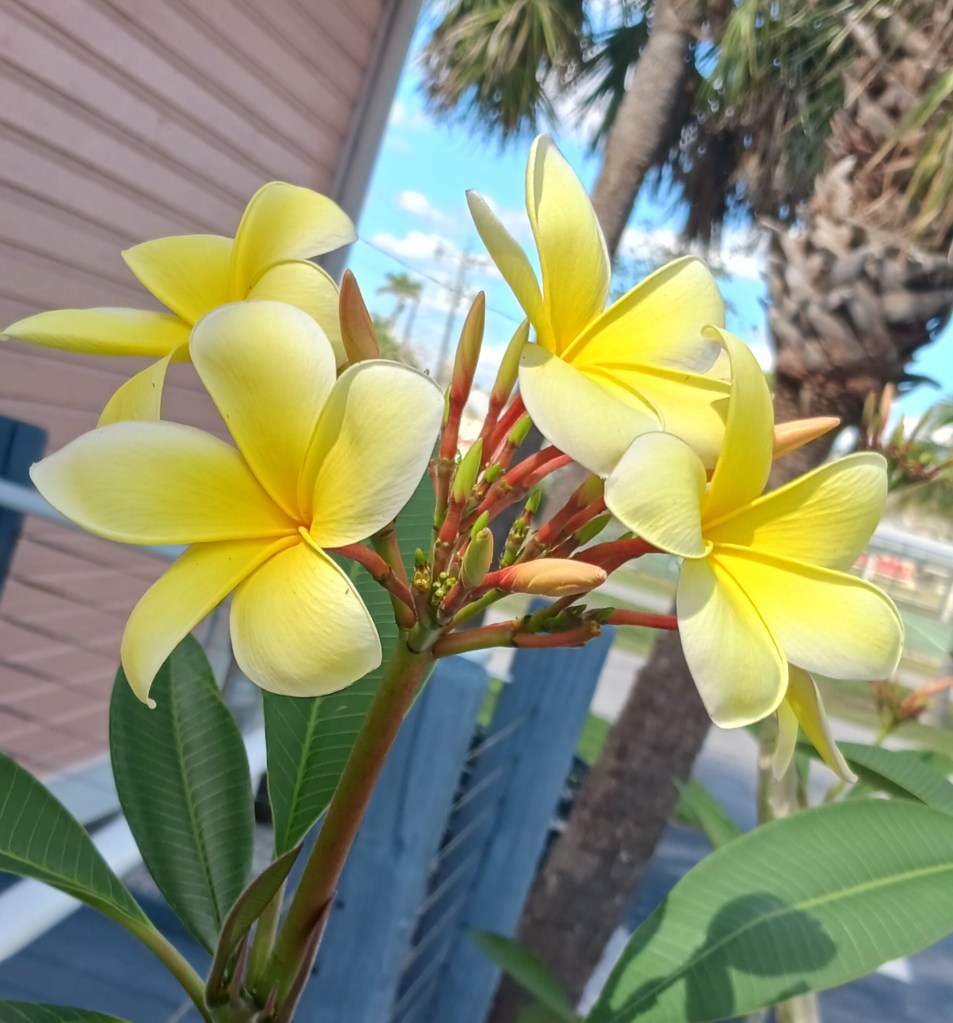
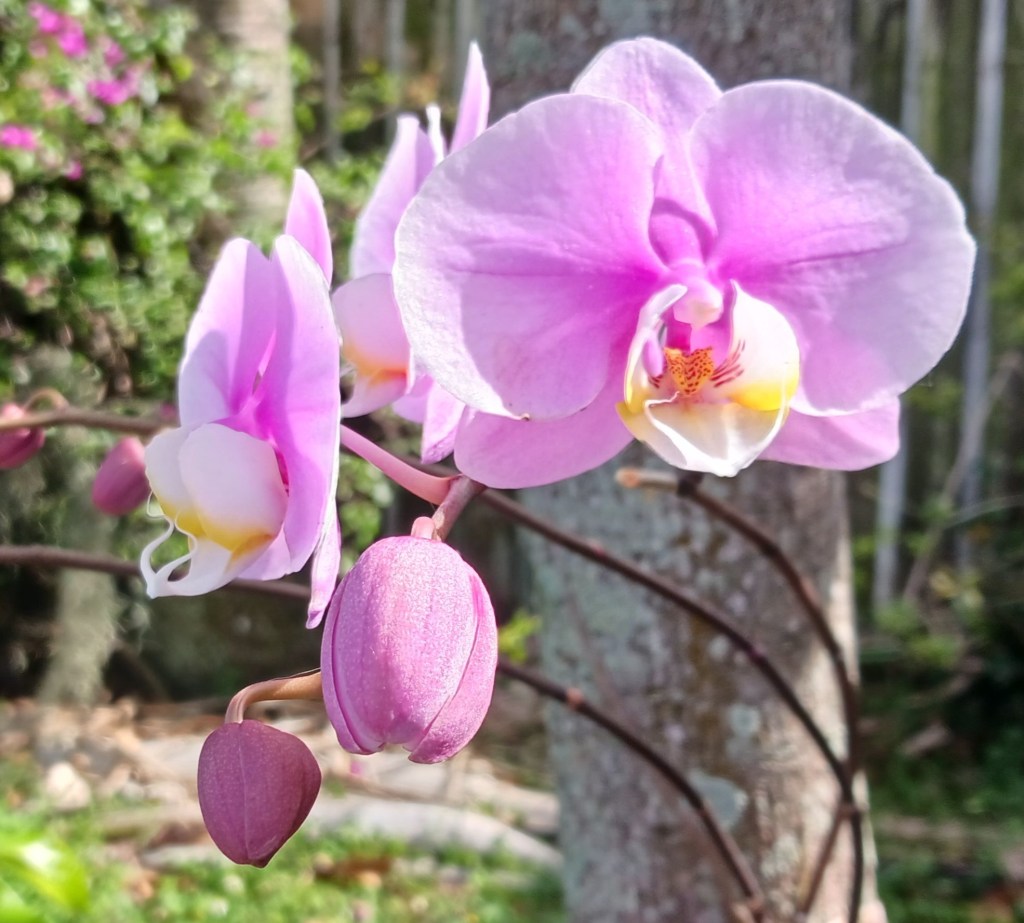
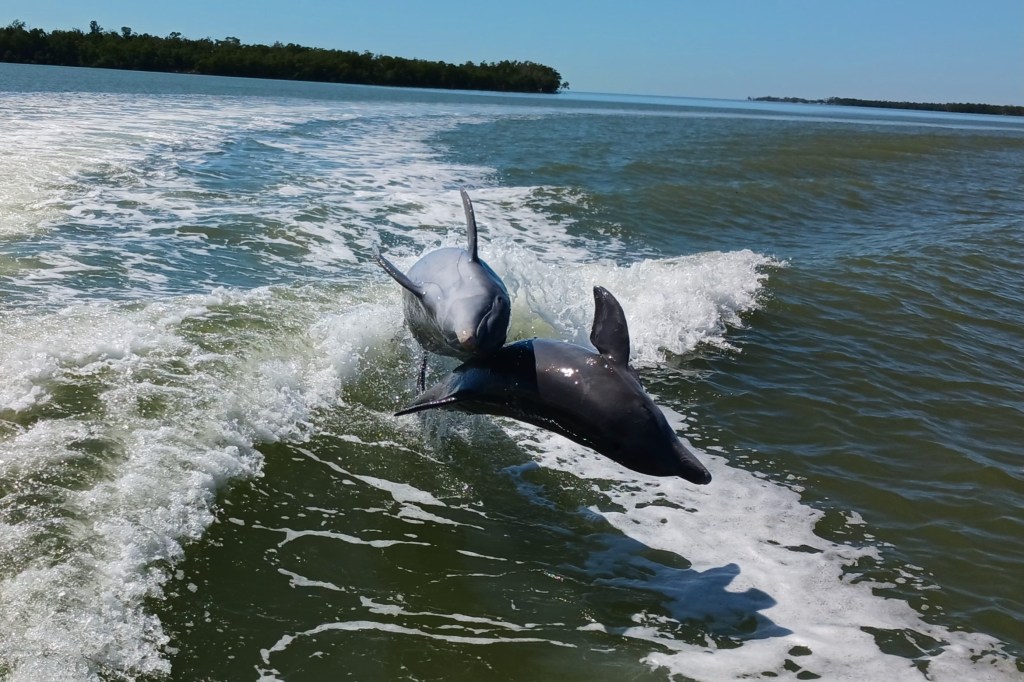
This might be completely unwarranted optimism. But I feel I have to end this blog with at least a little bit of uplift, because remember, there is no transformative action without hope. So, let me share my ultimate coping mechanism with you: the wonders of South Florida nature. Enjoy the flowers and get infected by these two mind-blowing, energetic, fun-loving dolphins, spotted in the Ten Thousand Islands area.
 The common sense feminist
One thought on “Coping strategies in a crumbling democracy – a snapshot”