The other day, a friend and colleague asked if I still had some energy left from my Sabbatical or if that had already faded. I had to think about this for a bit.
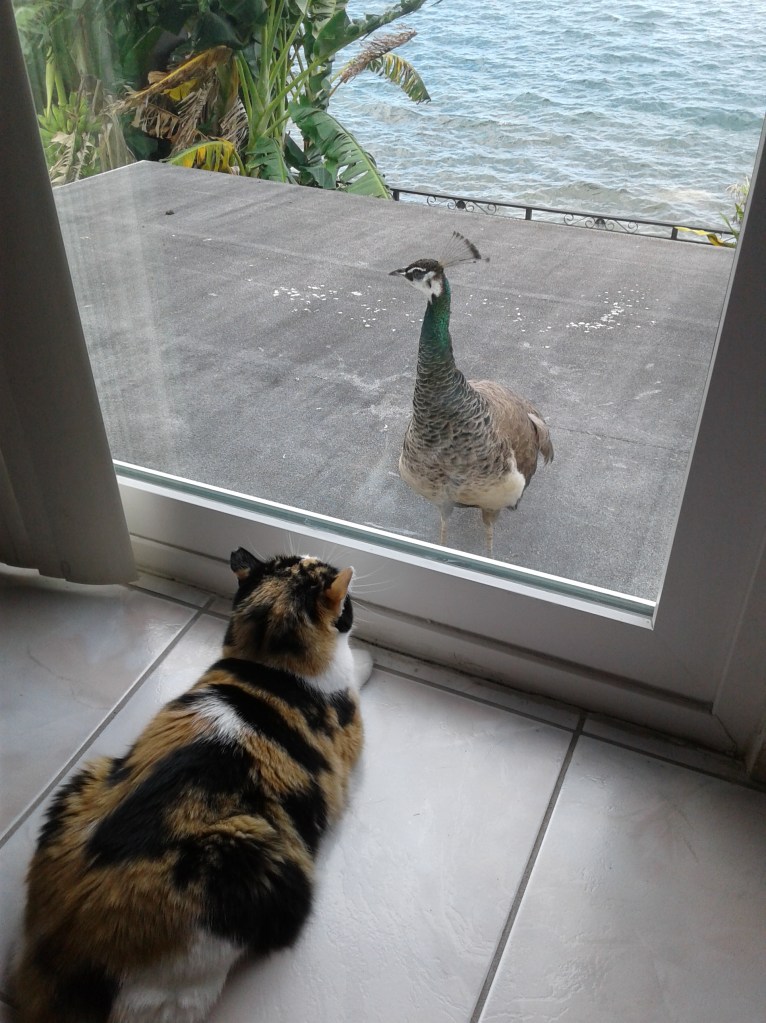
I still feel energetic and feel generally happier than in many other semesters. Some of the Sabbatical year practices are still with me, among them, paying attention to the beautiful and funny things in life (such as the encounter in the photo) and going running as often as I can in the morning. Also, I really, REALLY set time aside for writing projects and other things that excite me (currently, organizing a transnational feminist conference!). So, I am not fully run over by the daily institutional demands. But of course, they creep up; one thing I am re-realizing is that my institution is not great at valuing faculty and their needs and opinions. I don’t mean rhetorically – they praise us in highest terms whenever they can. But when it matters? A few instances in the last weeks reminded me that we might not have our administration’s back (e.g., when it comes to HB 7), or that our leadership is completely content in making decisions that affect faculty deeply without consulting us in meaningful ways (like: the President’s search – we were kindly informed of a single – internal – final candidate and then invited to ask him questions about his vision for the university …).
Those things are frustrating. I am not entirely sure how an institution could validate faculty in a way that we were all happy (we are a complicated bunch), but it would be nice if not everything went over our heads, and if we were not constantly told to do stupid things that take time away from what we love to do and are good at. One of those things is – in my opinion – to “help young people think”. One of my best moments in the last weeks: I go on my morning run in the park, work out a bit, and start a chat with a lady a bit older than myself; in the conversation, I mention that I am a college professor, and she REALLY says: “Ah. You help young people think.” I wanted to kiss her! Please, administration: talk to that woman. She gets it. The main thing is not to bring research money in for whatever research; or prepare students for the job market. It is to make them critical thinkers who can make a mark on this world. As a social scientist, if I accomplish that, I can die in peace.
Which brings me to some classroom experiences this semester. Let’s get some smaller complaints out of the way first – I do feel that Covid has added a layer of confusion or lack of direction for some students. They don’t come. They don’t read (those two things are not new). They don’t do assignments. They don’t know that there are assignments. They don’t read emails. When I asked one student if she read an email I sent – with important information for her on a zero for an assignment – she said her phone was broken and that was the only way she could read emails – so, no. If she had checked her grades, I asked – also, no, because she cannot access the learning platform … (some years ago, students might not answer emails, but I got complaints IMMEDIATELY if grades were posted that they were not happy with). Also, I let my undergraduates talk a lot, partly because I realized that I often don’t understand what they say, and I figured that they will then probably also not understand what I say. One thing I noticed – they don’t do disagreeing. One of them says something. Another one says they agree “100%” and then unfolds a very distinct position from the first student. This attitude supports a GREAT classroom atmosphere of acceptance. I admit I sometimes struggle with that, but I feel that there is a process of accumulative learning that sometimes makes me really happy. Not everybody gets everything right the first time (and what is “right” anyway), but I see lights going on, students making connections, asking critical questions, finding common ground. And for that, we have to be in conversation.
For example: I often assign an article by Charlotte Bunch from 1990 called “Women’s Rights as Human Rights: Toward a Re-Vision of Human Rights”. This is an iconic article – Charlotte Bunch, I cannot thank you enough for having written it. A conversation starter of a unique kind. But of course, it is also MUCH older than any of my students, so I always make sure to introduce it as a historical piece and then ask if the argument still resonates with them.

The argument is this: human rights are considered something important enough for a state to protect them; why is it, then, that women around the world suffer from many different forms of violence and discrimination and this is not considered relevant? The article shows the severity of abuses women experience (encapsulated in the phrase “sexism kills”) and makes several constructive suggestions how the human rights framework needs to be transformed to REALLY recognize women’s rights violations. I think Charlotte Bunch, not just with this article, but with her life’s work, has definitely brought the world closer to that goal.
Do my students agree that violence against women is a massive global pattern? Do they think that those who make this point, like Bunch, are being heard and that something meaningful is being done about this problem? In other words, have things changed in the last 30 years?
I have heard many reactions over time. One of them is that violence against women is now much more recognized and that things have improved. Sometimes, this position also contains a twisted normalization of such violence. In an unforgettable statement a student once emphatically affirmed the reality of gender equality in the United States only to add casually that “we all know a girl that has been beaten up by her boyfriend” (this episode stuck with me, and I had to put it in the introduction of my 2016 book on CEDAW and women’s rights translation).
In this semester’s class, I was surprised by several students who expressed a close connection to Bunch’s writing. They talked about normalization of violence within families, sometimes connecting this to their own cultural backgrounds, and in general, about not feeling safe as young women. They said they were constantly being told to be careful, and they clearly avoided doing things marked as putting themselves at risk.
We then had a discussion about what it is that might create a feeling of safety. One student identified general and mutual respect, or in other words, the opposite of a society where some people think it is normal that they can do what they want with others. And what could create that? Education! Someone else wanted serious consequences for acts of violence. While that would not be enough to instill a collective sense of safety and respect, it would still be important to keep at bay those rejecting these values. We would also need a more constructive (social) media discourse which does not stop at scandalous events of violence, but rather informs about dangers and root causes in a non-sensationalist way. This together with public spaces and resources would help to organize and create collective strategies against abuse and to foster mutual respect …
Yes, it sounds like I am writing from another planet. It’s election time, and the divisiveness of political discourse is at a level where it feels it cannot get any worse. But classroom discussions like this make clear to me that people are less divided than these political discourses suggest. Classrooms are public spaces – I am so glad we have them. Of course, the HB 7 police is probably less happy. I had forgotten about them, until last week, when we talked about ecofeminism and several students enthusiastically commented that they had ”never before” heard that the oppression of women and exploitation of nature hang together and that made “so much sense!” Even the fact that capitalism was at the core of this exploitation was accepted, even embraced. Oh dear, I thought, that is what the higher-ups probably wanted to prevent, but hey: Everybody was allowed to say whatever they wanted! And nobody was made feel guilty …
As you can see – it really is great to “help young people think”! No doubt about it. We have it good as academics, even if the Zeitgeist whispers into our ears that we are only worthy if we produce revenue and output (shut up, Zeitgeist).
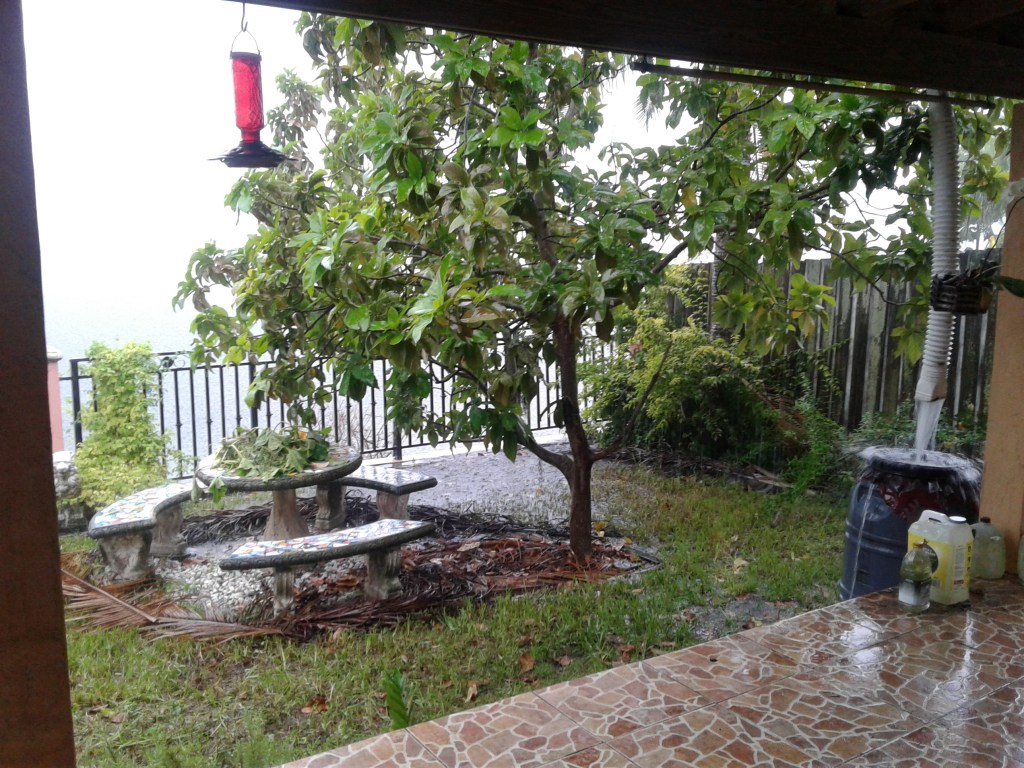
As is seasonally adequate, I am grateful for the spaces we still have. And also, that this year’s hurricane season is almost over, and we had our backyard flooded only once. This is not really related to the post, but I had these two pictures which I think show you that it is only a matter of time that Mother Earth takes revenge. Go ecofeminism!

 The common sense feminist
Right on, Susanne! I am with you: helping students and younger individuals develop their critical thinking is the choice. Regrettably, it is poorly appreciated and remunerated in all senses, particularly if it does not bring cash and funding to the institution. BTW, continue running and working out. It oxygenates our brains and makes us think more clearly and coherently. I recommend it to all our colleagues–I am a avid runner for the last 45 years.
LikeLiked by 1 person
Thanks for making my day. Love that you treat your classroom as public space. and yes a major success is making our students think. VEry inspiring. And love the pictures at the beginning and the end. Keep on doing the self care part as well as everything else that makes you a successful academic. This is a lesson I learn from Susanne. DANKE!!!!
LikeLiked by 1 person