


I have left my temporary home in Sir Arthur Lewis Residence Hall (see above some last moment impressions – all of a sudden, everything looked so purple-beautiful …), returned to Miami and am reunited with my lovely family! In terms of climate, I do not have to adapt much, but other things remind me of the different worlds that the United States (especially Florida) and Trinidad and Tobago represent. No birds waking me up, but rather a lot of airplanes flying over our house. “Survival of the fittest” traffic – it is such a relief if you don’t have to be in it for a while. Will never forget that the Trinis honk to THANK each other – when another car lets you pass, you do a short “beep-beep”. That would probably be incomprehensible for a Floridian (both the letting pass and the thank-honking). On my morning walks, I am now greeting people I pass. Actually, many react. Let’s see how long I will keep up with it.
While I have returned, I still wanted to keep writing a bit longer. At the very least, I wanted to explain to you what I actually came to do in T&T. In this blog, I have mostly described what I found out walking around with open eyes in a new country and trying to make sense of it. This has not only been a fantastic experience, but also a very important part of my research, which in the end, is all about understanding social relations.
More narrowly-scholarly, I came here to do a specific research project, endorsed and financed by the Fulbright Program (thank you, US government). Title: “Norms for whom? Caribbean engagements with global gender equality frameworks”. In this title, you can see two of my passions: gender equality and global frameworks. The latter means multilateral agreements, in form of treaties, platforms, goals – however governments want to call it. As many of you know, I have long worked on one specific such global framework, the United Nations Convention on the Elimination of All Forms of Discrimination against Women (CEDAW) – often called the women’s bill of rights. What most interests me is how states and societies use such global tools to make gender relations more equal, or in other words, if a global women’s rights treaty makes a difference in the lives of people.
For now, I am particularly curious how global gender equality frameworks are used in Trinidad and Tobago (originally, I wanted to study other Caribbean countries as well, but Covid made me narrow things down). Let’s keep in mind that gender equality is a goal that no society has yet achieved, which means that there are traditions and institutions everywhere that rather support gender hierarchies, and let’s also not forget that there is no linear path of improvement, but rather a lot of two steps forward one step backward movements when it comes to making gender relations more equal.
Global gender equality frameworks acquire legitimacy through the approval of the world’s governments. However, influenced by de- and postcolonial literature, I have been wondering if these frameworks are really all that useful for small, geopolitically marginal, postcolonial societies like the ones in the Caribbean. What I mean by that is: While international agreements are influenced by many players – think of endless negotiations among the world’s state representatives – the interests of the most powerful actors are always dominant. Considering these power relations, how much room is there for Caribbean realities and needs, in particular if they are different from, or even contrary to, those of the most powerful players?
It is quite interesting how representatives of small states navigate international relations. They know they cannot get everything their countries need but they try to get as much as possible, for which they need to consider the preferences of those powerful players they depend on. Often, this makes for careful and considerate politics within a problematic status quo. Sometimes, you also see some open challenge of that status quo, as in several socialist/leaning experiments in the Caribbean during the Cold War (e.g., Grenada, Guyana, Jamaica). The regional superpower made clear what it thought of it; other small states took notice and behaved accordingly, for their own “self-preservation”.

In this hierarchical world, how have global gender equality agreements influenced Caribbean societies? Have they helped address gender hierarchies, or are they too far removed from the real-world problems of Caribbean women and men? To approach this question, I have thought of three research dimensions: first, learn about how gender relations manifest themselves in the Caribbean and how Caribbean feminist activists have tried to transform them; second, find out how Caribbean feminist voices have influenced global frameworks; and third, look at governmental and societal work on gender issues and see if and how global norms are used. I am reading tons of literature, newspaper clippings, reports etc., and I have been interviewing several fascinating people. Thanks to zoom, I will continue doing this now that I am not anymore in the country – as a matter of fact, even while in Trinidad, most conversations took place on screen.
Thus far, several things have become clear to me: first, I still have much to learn, which is exciting and will keep me busy for a while. In other words, I am not “done” with my “field work”, but rather feel I have just started to be part of a very interesting, complex, and pathbreaking feminist conversation. Second, there are no neat separations of levels of analysis or roles of individual actors. Implicitly, I organized my research question that way: global-domestic; governmental actor; civil society activist; scholar/ expert. What I have found is – let’s call it passionate multitasking. It is not uncommon for feminists to bridge roles, such as being a scholar and an activist. But in the Caribbean, I found people who a) created/ are creating pathbreaking feminist scholarship, b) founded and engage in several civil society organizations, c) work with or for the government providing gender expertise, and d) represent their country in international organizations. These different roles, as you can imagine, don’t always harmonize, and people do not do all of this at the same time but move out of one role and into another, but I was still struck by the way in which these elements came together. Scholarship as a passion; duty to one’s nation; engagement with grassroots organizations; working in international organizations.
These women defy the assumption that global agreements could completely sideline Caribbean interests because they know everything about gender relations in the region, are connected to “ordinary” Caribbean people, and have made their interests loud and clear. Not surprisingly, Caribbean activists have been instrumental, especially in the 1980s and 90s, to internationally articulate the perspectives of women from the Global South. “Smallness” of Caribbean countries seems to be key for this position – one can develop a close relationship to both the government and several segments of society. Also, the governments are very actively multilaterally engaged.
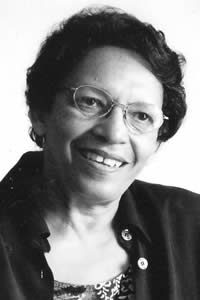
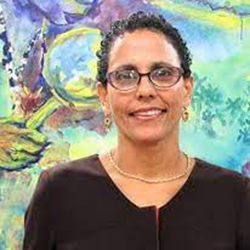
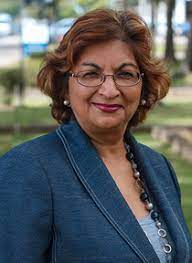
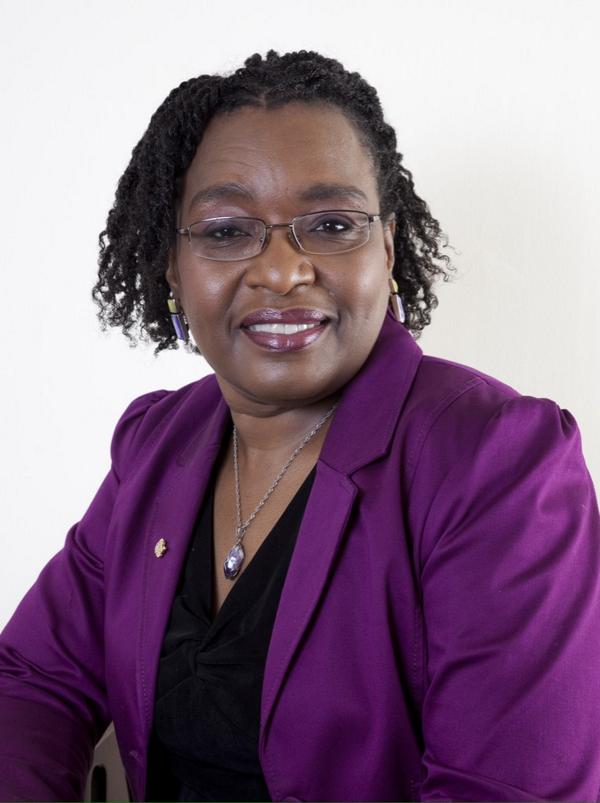
Here are some big names (and pics) of international-domestic passionate feminist multitaskers two of which I had the pleasure and honor to meet: Peggy Antrobus; Roberta Clarke; Lucille Mair; Patricia Mohammed; Rhoda Reddock.
Also, I am still figuring out how to think about “gender relations here”. The first thing I realized is that it makes no sense to think of gender as a stand-alone category. I have written before about the hybridity of T&T society, based on the historical division and hierarchy among ethnic groups – white Europeans, Black and colored people (free or enslaved), and indentured Indians (and some smaller groups such as Amerindians and Chinese). Gender relations are tied into these ethnic groups and resulting class hierarchies; the life of a white woman had not much in common with an Indian woman, for example.
Some assumptions about gender relations that seem to be quite established (but fit better to European realities) do not apply here. In particular, the idea that a woman who does not work is in a weak position and entirely dependent on her husband. Historically, in the Caribbean, the only women who did not work were those of the white elite: they oversaw domestic servants, entertained, or were active in charitable organizations. All other women worked. During the 19th century, that typically meant extremely hard, physical labor in agriculture, alongside the men of their group, but for lower pay. In the early 20th century, society slowly moved away from the most gruesome forms of labor exploitation (indentureship ends in 1921). At the same time, resentment against colonialism was forming, and this led to independence in 1962, but nonetheless, what was considered a modern, progressive, “better” way of doing things was very heavily associated with how things were done in Great Britain/ by the white elite. Hence, while white Europeans were a tiny part of T&T society, they represented a position that the black and colored middle class aspired to. Education was a way to get there for men (see the career of Eric Williams, last post). For women, education was also important, but their education had a specific goal: that of “respectable womanhood” in support of the male head of household.
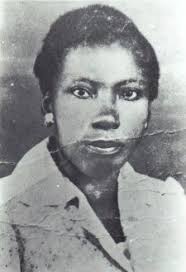
I should say that these efforts were more appealing to the middle classes who could hope for some return if they bought into Eurocentric traditions; but working-class Trinbagonians were less impressed. As is true for most working-class people around the world, gender roles were relatively equal, in the quest to secure collective subsistence. Women were also extremely visible in the labor disturbances of the first four decades of the 20th century, even if the most prominent leaders were typically men (the labor leader Elma Francois is an exception in this regard). There was some difference between Afro-Trinidadians and Indo-Trinidadians; the latter group emphasized a more domestic, secluded role for women in order to maintain their Eastern cultural traditions.
However, something surprising happens in the first half of the 20th century, as I learned from Rhoda Reddock’s pathbreaking 1994 book “Women, Labour and Politics in Trinidad and Tobago. A history”: women become “housewifed” (those who remember this term as one coined by Maria Mies: she was Rhoda Reddock’s dissertation supervisor). Women’s identity gets rewired from being a core part of the working class to being mainly responsible for family reproduction, and that task is partly framed as a dignified support role, and partly made invisible (and with that, detached from value and remuneration). In parallel to this new ideology – let’s call it “respectable gender complementarity” – there was a material trend: the oil industry, a male-dominated field of employment, replaced agriculture as the dominant economic sector. Hence, women’s labor force participation dropped significantly. Part of that drop was also the redefinition of women who continued to work in agriculture as “supporting family workers”. The “real” worker, in statistical terms, was the male head of household. The process is of course more complex than I can describe here, but what is fascinating is that there was a colonial aim of “uplifting” the population by imitating British gender relations, and this meant to educate people. However, the education was very gender segregated: it opened many doors for middle class men (e.g., medicine, engineering), but for women, it meant to be educated into supportive housewives.
Since independence, educational opportunities for women have widened and more young women than men now attend university. This is something Caribbean states are proud of, sometimes perhaps even scared of – starting in the 1990s, there have been intense public debates on the marginalization of men (mostly young, poor men). The more unfortunate parts of this debate have blamed the dominance of women for the emasculation of men, but it also became clear that the needs of men have to be considered in public gender policies, especially of men whose futures are crushed by economic crises.
In present day T&T, women are VERY present. Their high level of education still does not translate into equal pay and equal political representation, but they are visible as public servants, business owners, and all kinds of professionals such as teachers and university faculty; they also remain crucial pillars of their communities and families, as mothers, often single heads of household, child minders in other ways (aunties/ grandmothers/ neighbors …), informal vendors, etc.
On the one hand there is this distinct female visibility that even men are very clear about. On the other hand, Trinidad and Tobago is strongly influenced by conservative and patriarchal institutions such as the Catholic Church. Of course, many women are devout Catholics, but the strength of the church means that issues such as sex education and access to contraceptives are still a bit of taboo topics. Abortion is not legal. Neither is sex work. Also, while there is a good system of paid (!!! Are you listening, United States???) maternity leave in place, there is NO parental leave, except for three days a father is entitled to take. I admit that surprised me in a society with women so self-reliant and outspoken. I don’t think there is ANY policy that can more effectively equalize gender roles within the family than parental leave that truly allows fathers to actually father their newborn and small children. Perhaps this has something to do with a perceived strength of women and their networks, who have since time immemorial been responsible for raising children?
Another oddity: the discrimination against LGBTQI people. There is increasing activism and I think one can say slow societal changes are happening. However, sexual orientation and gender identity are categories excluded as ground for discrimination that is prohibited in the Equal Opportunities Act (2000). I find it hard to understand that in a society that has been handling so many differences, that is really a model of tolerance in many ways, THIS particular issue – that each person should have the right to fall in love with whom they feel attracted to – seems so unacceptable. Let me blame it on the Catholic Church (sorry, but you have just messed up too much over the centuries): In my newspaper clipping reading, I found a remarkable statement from 1985 (ok, that is long ago, but it’s still quite a read). The archbishop explains the attitude of the Church toward homosexuals, and he makes clear that they want to “leave no one, absolutely no one, behind”. And then, he says stuff like this: “Especially is it important to help homosexuals not to have a low self-image or deprive themselves of self-respect by leading them to believe they are perverse beyond redemption”. And this: “Homosexual tendencies can come from several sources, not all equally blame worthy, and this has to be taken into account. In any case, having a tendency is one thing, following the tendency is quite another.”
I did not even delve into the tremendous level of gender-based violence, but I will leave that out for now. The post is already too long, and thank you all for reading through it! As you can see, the scholar in me could not limit herself to a reasonable word count. What else is new 😊
 The common sense feminist